CPAP vs. oral appliance in Glen Allen, VA
Both treat sleep apnea. Here's an honest look at how they compare, so you can find what works for you.
CPAP vs. oral appliance: which is right for you?
What each one does
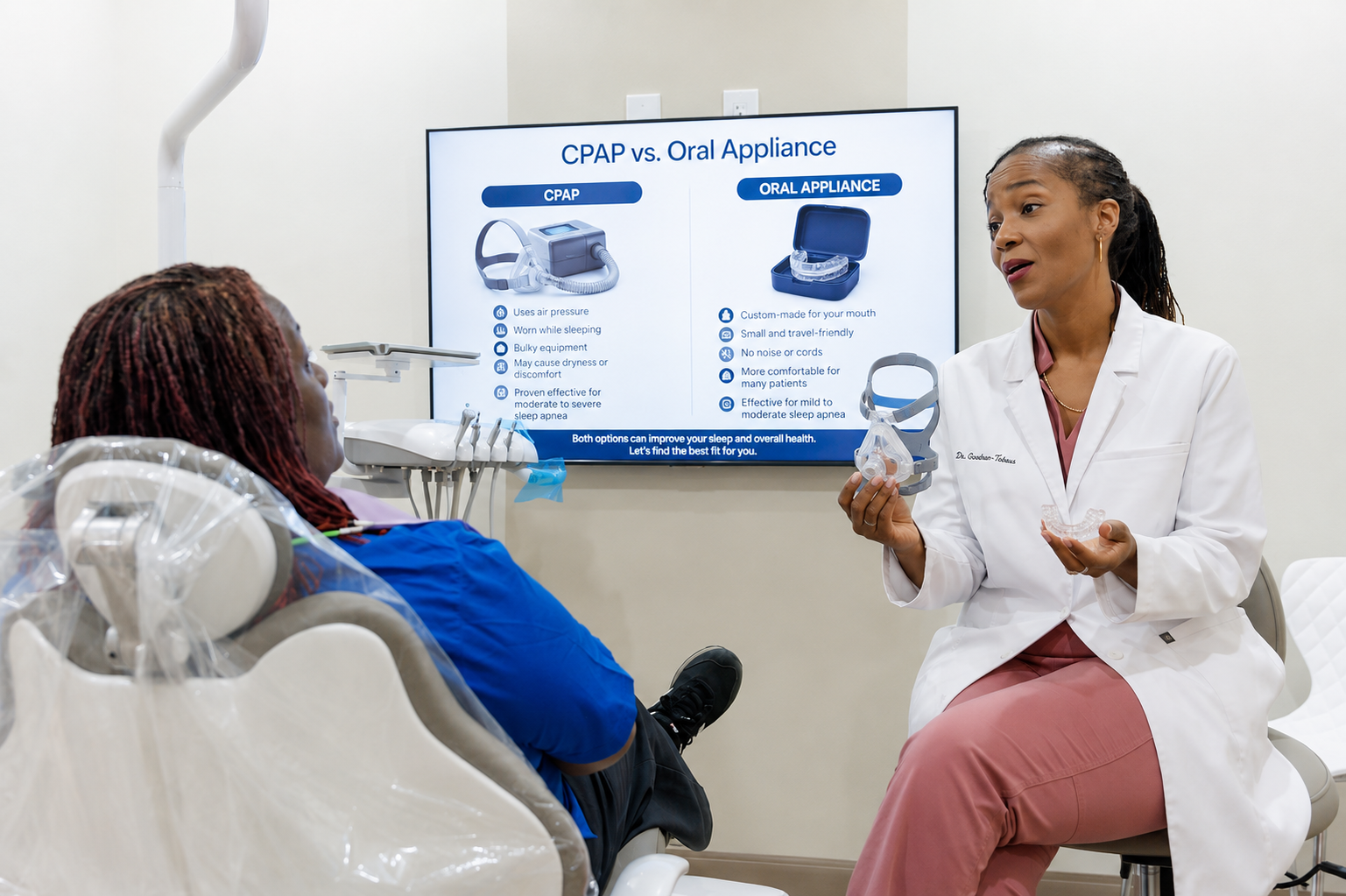
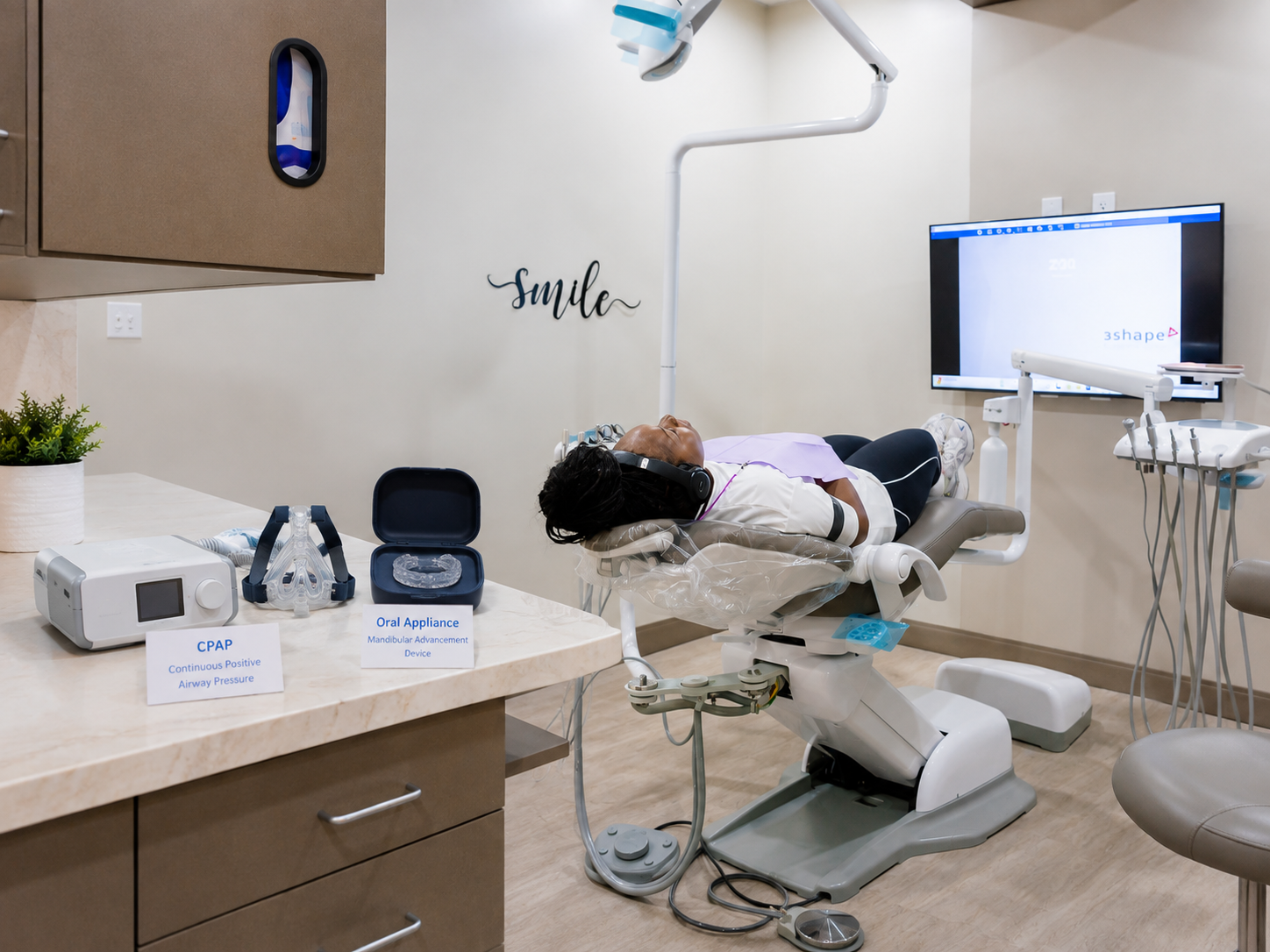
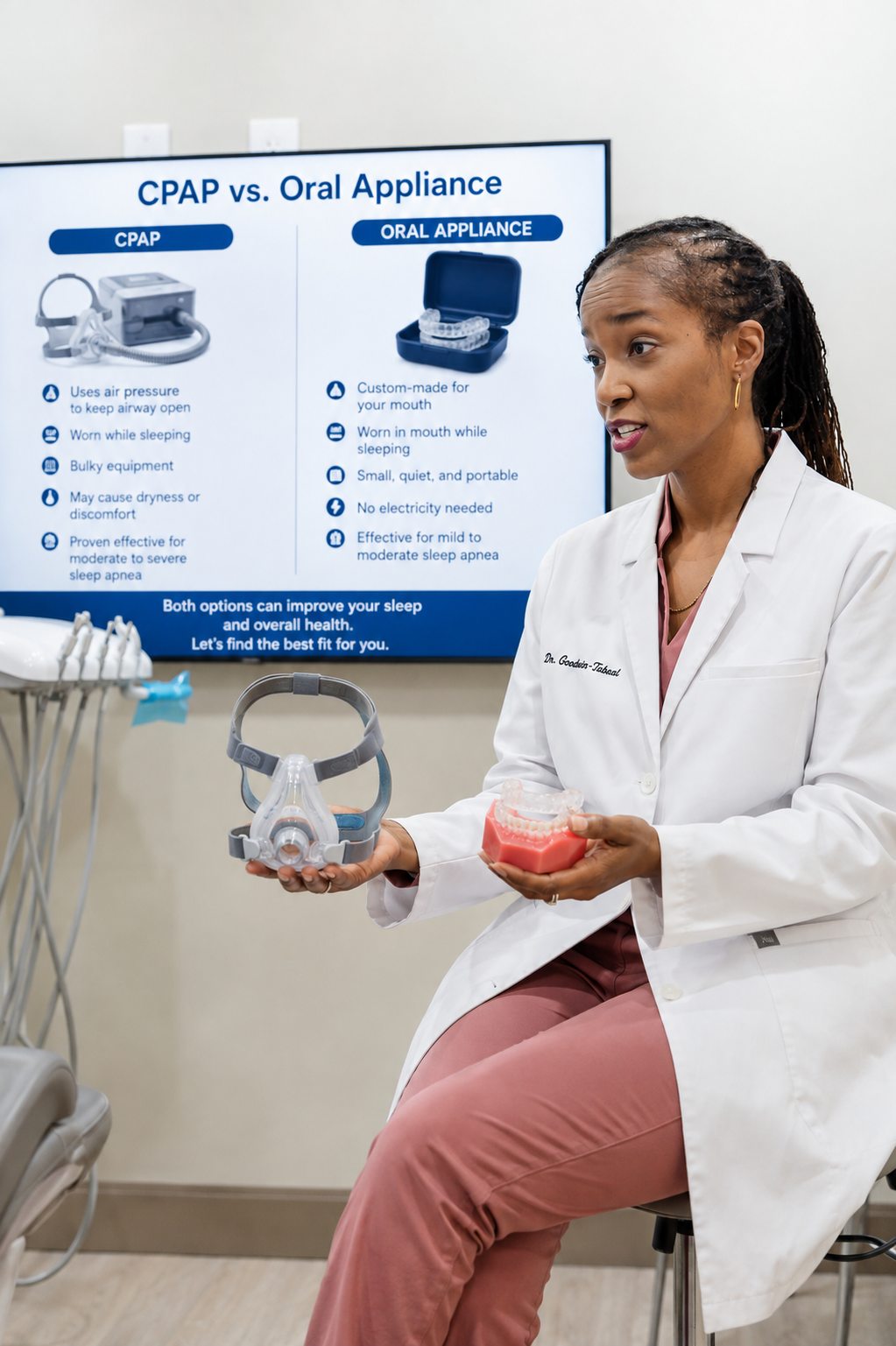
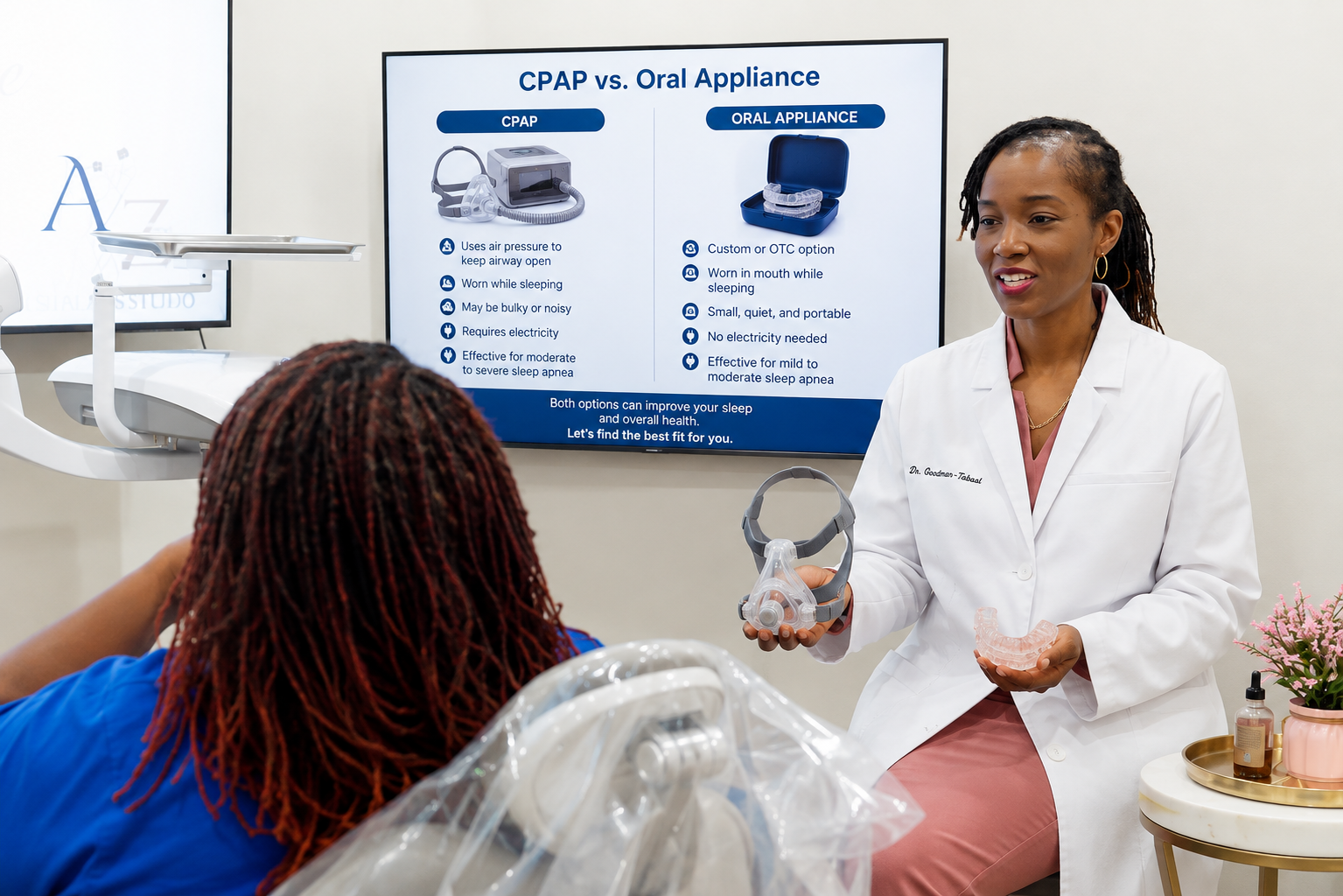
A CPAP uses a mask and a stream of air to keep your airway open. An oral appliance is a small custom device that holds your jaw forward to do the same thing without a machine. Both are proven treatments; the right one depends on how severe your apnea is and what you’ll actually use every night.
The honest trade-offs
CPAP is the most effective option for reducing apnea, especially when it’s severe, but only if you wear it consistently, and many people can’t. An oral appliance is quieter, smaller, easier to travel with, and far easier to stick with. For mild to moderate apnea it can match CPAP results, and the best treatment is always the one you’ll use every night.
You don’t always have to choose just one
If you have severe apnea and struggle with your CPAP, combining the two can help. And if you’re fully CPAP-intolerant, an oral appliance means you’re still treated rather than going without. We work with your sleep physician to find the approach that fits your diagnosis and your life.
I was prescribed a CPAP but I hate it. What are my options?
You’re not stuck. Many people who can’t tolerate CPAP do well with a custom oral appliance, especially for mild to moderate apnea. We’ll review your diagnosis with your sleep physician and find a treatment you’ll actually stick with.
Is switching from CPAP to an oral appliance a step down?
For mild to moderate sleep apnea, an oral appliance can be as effective as CPAP, so you’re not losing protection. What matters most is consistent use, and an appliance is far easier to wear every night.
Can I use both?
Yes. For severe apnea, combination therapy, using CPAP and an oral appliance together or on different nights, can be a good solution, particularly if you can’t use CPAP every night. We’ll help you figure out the right mix.
Get Real Answers
➔ An honest comparison, not a sales pitch
➔ A solution for CPAP intolerance
➔ Coordinated with your sleep physician
➔ Focused on what you’ll actually use
Frequently Asked Questions
Why do so many people stop using their CPAP?
Many people quit CPAP because the mask feels claustrophobic, the hose is awkward, the machine is noisy, or it's hard to travel with. The therapy only works when you wear it, so if you've abandoned yours, a custom oral appliance is often a more livable alternative.Is an oral appliance quieter than a CPAP?
Yes. An oral appliance is completely silent because there's no motor or airflow, just a small device you wear like a retainer. Many bed partners prefer it for that reason, since there's no machine noise and no snoring to disrupt the room at night.Can I switch to an oral appliance if I already own a CPAP?
Yes. Many of our patients come to us already owning a CPAP they can't tolerate. We'll review your diagnosis, coordinate with your sleep physician, and, if an oral appliance is appropriate, transition you to something you'll actually wear every night.Which is better for travel, CPAP or an oral appliance?
An oral appliance is far easier to travel with. It's small enough to fit in your pocket, needs no electricity, and works anywhere, including flights, camping, or places without reliable power. A CPAP requires an outlet and takes up luggage space, which many frequent travelers find limiting.
Sleep and airway insights from our team
From spotting the signs of sleep apnea to understanding your treatment options, our blog breaks down what you need to know about sleeping and breathing better.