Snoring vs. sleep apnea in Glen Allen, VA
Is your snoring harmless or a warning sign? Here's how to tell the difference, and why it matters.
Snoring vs. sleep apnea: what's the difference?
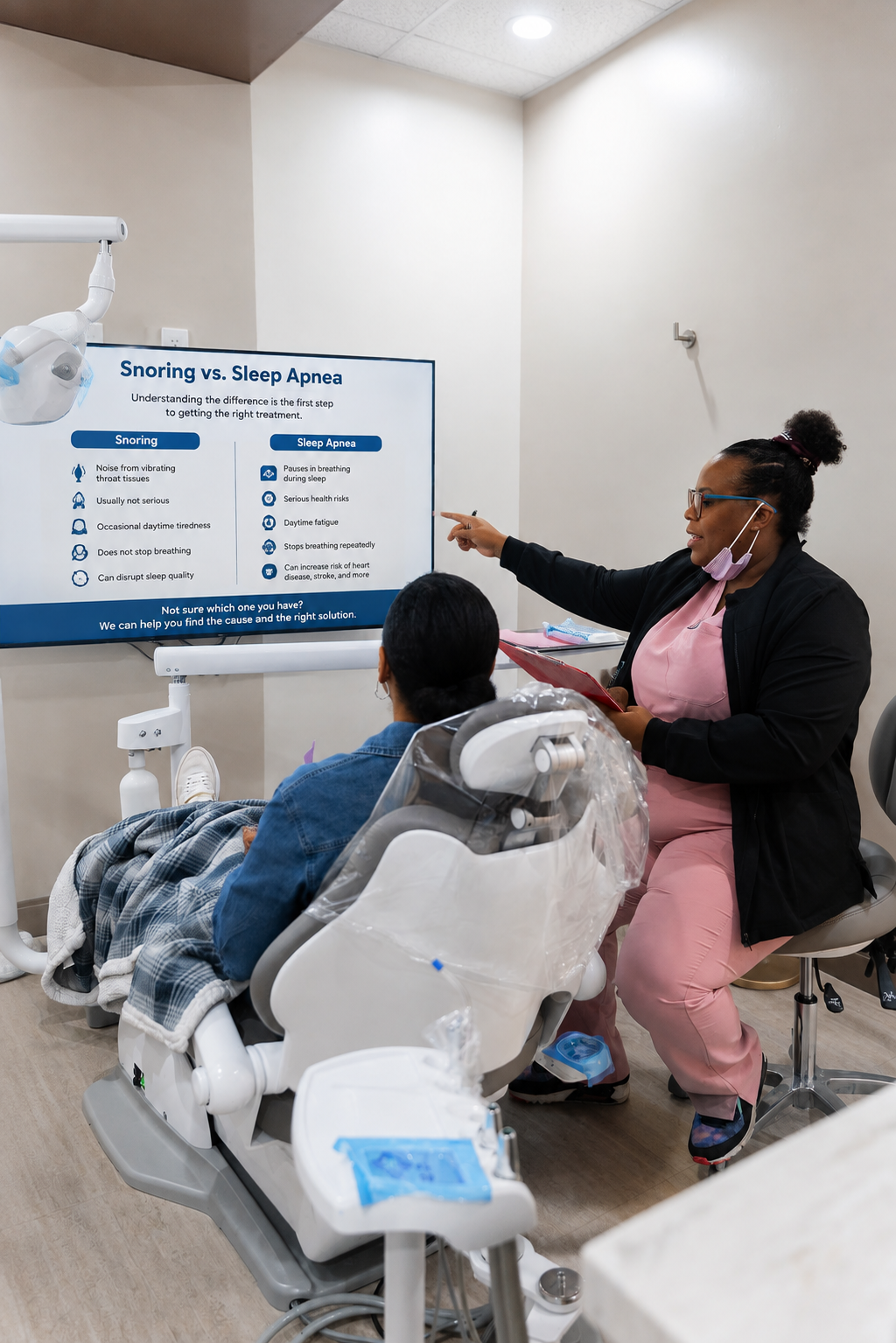
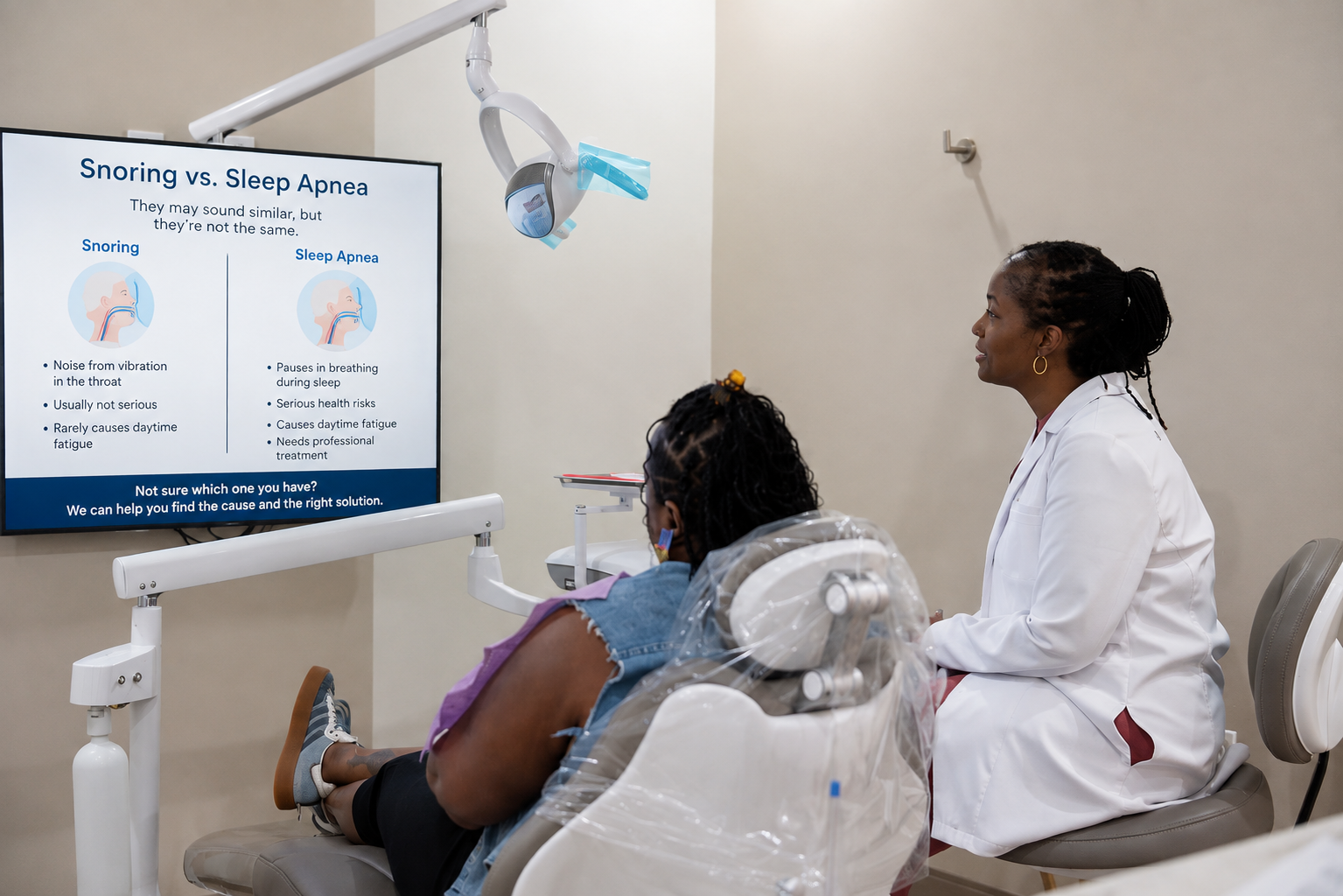
Snoring is a sound; sleep apnea is a pause
Snoring is the sound of air squeezing past a partly blocked airway. Sleep apnea is different, it’s when your airway collapses enough that you actually stop breathing, over and over, through the night. You can snore without having apnea, but loud, frequent snoring can be one of its clearest warning signs.
Why the difference matters
Simple snoring mainly affects sleep quality, yours and your partner’s. Sleep apnea affects your health, raising the risk of high blood pressure, heart problems, and daytime exhaustion. Since you can’t tell which one you have from the snoring alone, a simple sleep test is the only way to know for sure.
Both are treatable here
The good news is that whether you have harmless snoring or sleep apnea, we can help. A custom oral appliance can quiet snoring and treat mild to moderate apnea at the same time. We start with a sleep study so your treatment matches what’s actually going on.
How do I know if my snoring is dangerous?
You can’t tell from the snoring alone, which is why a sleep test matters. If you snore loudly, wake up tired, or a partner has seen you gasp or stop breathing, it’s worth getting checked for sleep apnea.
Can you treat snoring even if I don’t have sleep apnea?
Yes. If your sleep test shows simple snoring without apnea, a custom oral appliance can still help quiet it so you and your partner sleep better.
My partner is the one who snores. Can they be seen?
Absolutely. Many people come in because a partner noticed the snoring or heard them stop breathing. That outside observation is often the first real clue, and we welcome it.
Is It Snoring or Sleep Apnea?
➔ A clear answer from a simple test
➔ Treatment for snoring and apnea alike
➔ Relief for you and your partner
➔ Comfortable, custom devices
Frequently Asked Questions
Does snoring always get worse over time?
Not always, but it can, especially with weight changes, aging, or alcohol use. Snoring that's getting louder or more frequent is worth checking, since it may signal a narrowing airway or developing sleep apnea. A simple test can tell you whether it's changing for a concerning reason.Can women have sleep apnea even if they don't snore loudly?
Yes. Sleep apnea in women is often missed because it can show up as fatigue, insomnia, anxiety, or morning headaches rather than loud snoring. If you feel unrested despite enough sleep, it's worth getting evaluated even if snoring isn't your main symptom.Is snoring hereditary?
It can run in families, since the traits behind it, like jaw shape, airway size, and how your soft tissue sits, are partly inherited. If snoring or sleep apnea is common in your family, it's worth paying attention to your own sleep and getting checked if symptoms show up.Can allergies or a stuffy nose cause snoring?
Yes. Congestion from allergies, a cold, or nasal issues can narrow your airway and make you snore, sometimes only temporarily. But if your snoring is loud and happens most nights regardless of congestion, it's worth ruling out sleep apnea with a proper test.
Sleep and airway insights from our team
From spotting the signs of sleep apnea to understanding your treatment options, our blog breaks down what you need to know about sleeping and breathing better.