
Upper airway resistance syndrome (UARS)
Exhausted but told your sleep test was "normal"? UARS is the diagnosis that often gets missed.
About upper airway resistance syndrome (UARS)
When you don’t stop breathing, but you’re still struggling
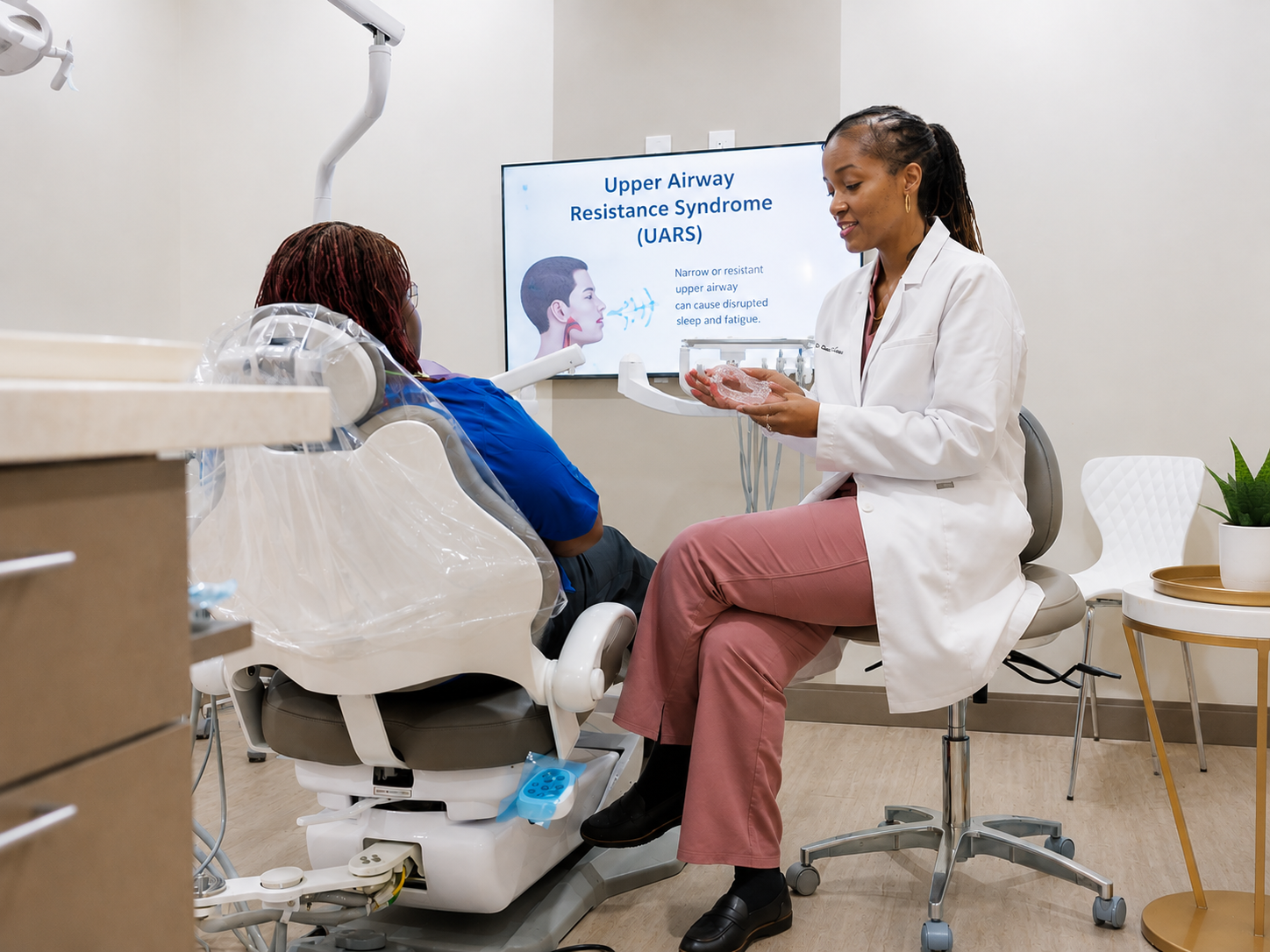
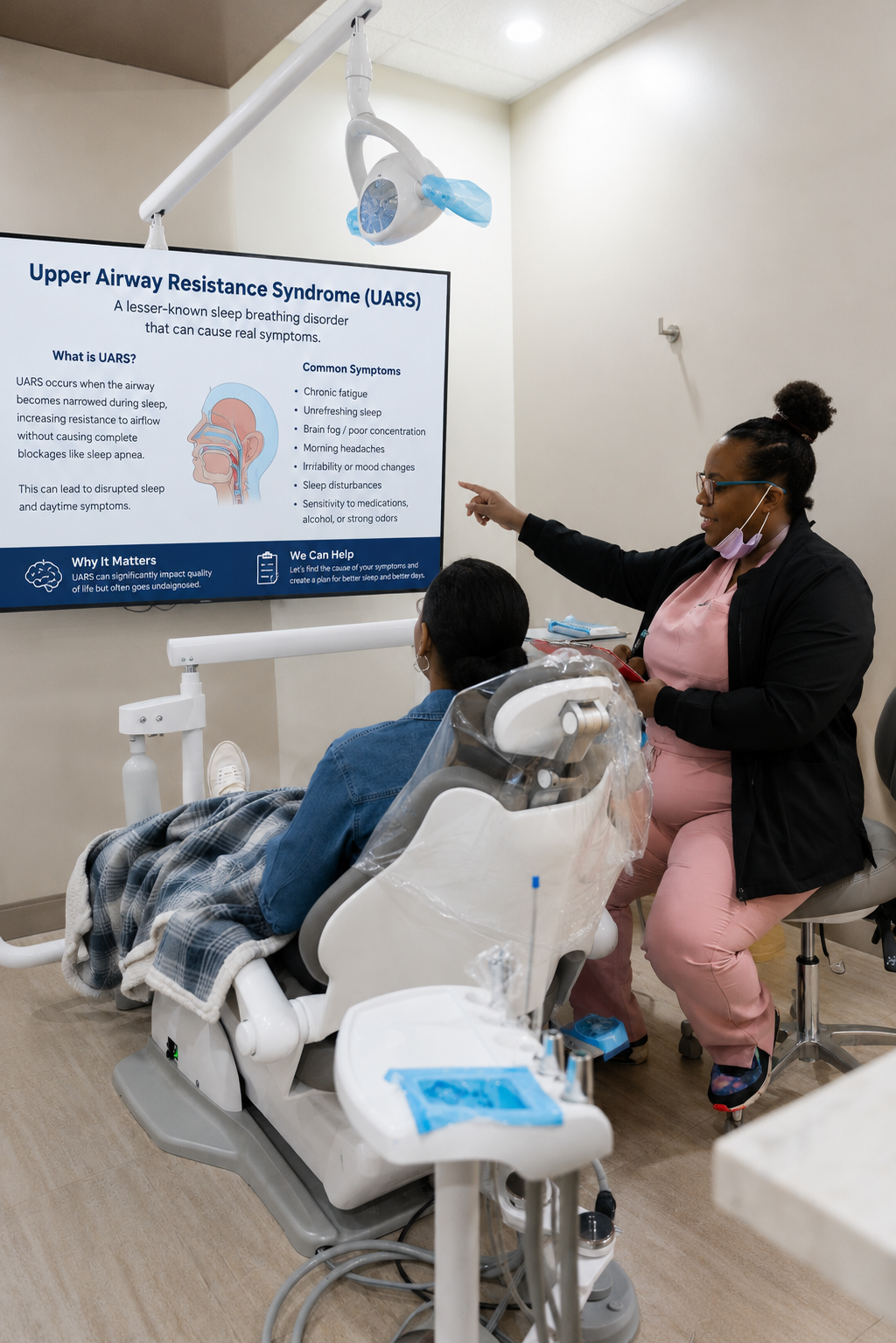
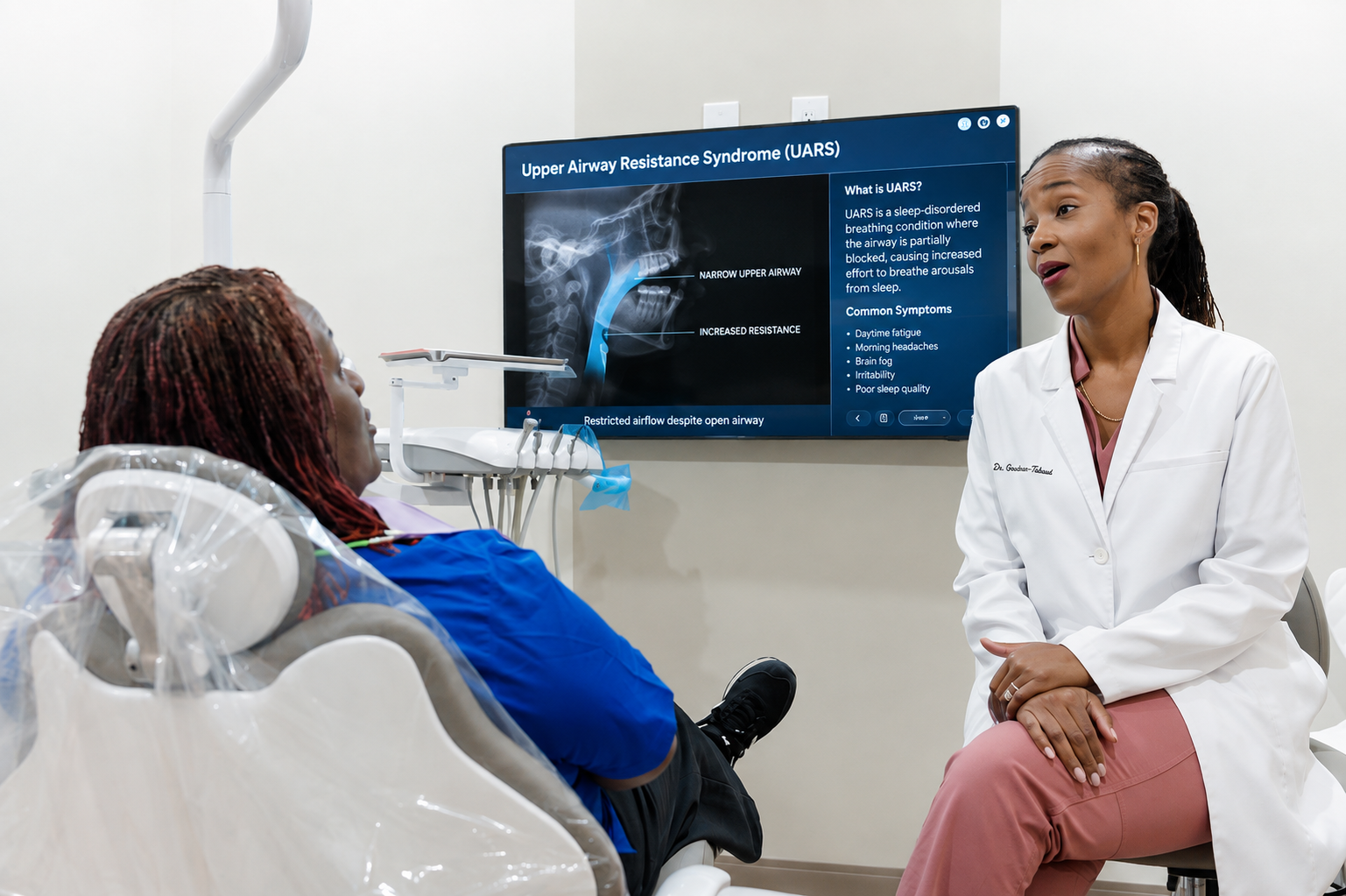
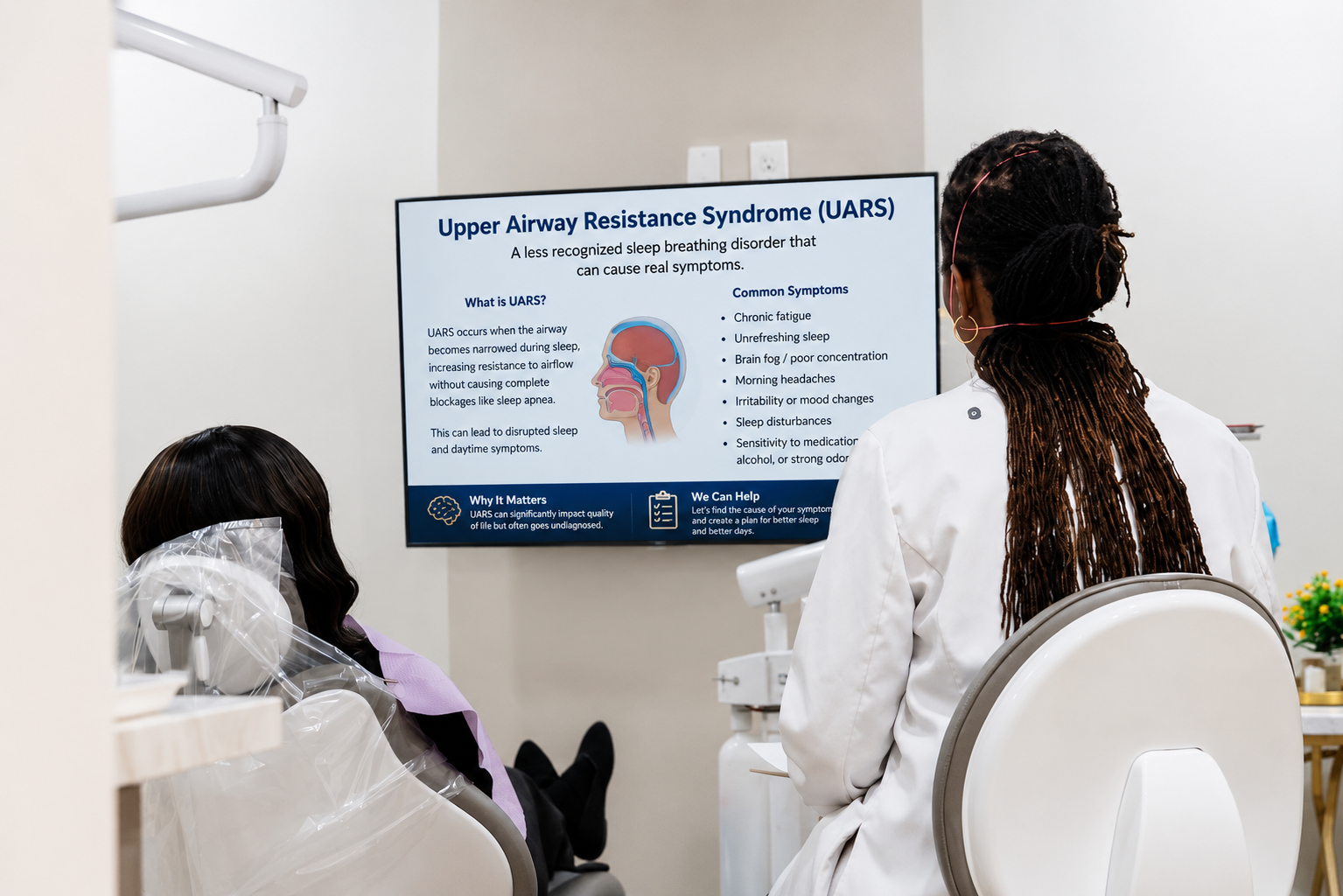
Upper airway resistance syndrome is a sleep-disordered breathing problem where your airway narrows enough to make breathing harder, without fully stopping the way it does in sleep apnea. You may not register on a basic test as having apnea, yet your oxygen levels still dip and your sleep is still disrupted.
Why it’s so often missed
Because you don’t technically stop breathing, UARS can be overlooked, and people are told everything is fine even though they feel exhausted, foggy, or anxious. Dr. Goodman-Tabari knows this one personally, she has UARS herself and treats it with an oral appliance, which shapes how closely she looks for it in patients.
How we find and treat it
It takes a careful look at your airway and the right kind of testing to catch UARS. Once we identify it, a custom oral appliance can open your airway and support your breathing through the night, so your oxygen stays steady and you finally get the restorative sleep you’ve been missing.
My sleep test was normal but I’m always tired. What now?
You may have upper airway resistance syndrome, where your breathing is strained without fully stopping. It can be missed on a basic reading. A closer look at your airway and the right testing can find it, and it’s treatable with an oral appliance.
How is UARS different from sleep apnea?
With sleep apnea you actually stop breathing; with UARS your airway narrows and makes breathing harder, but doesn’t fully stop. Both disrupt your sleep and drop your oxygen, and both can be treated.
Can an oral appliance help UARS?
Yes. An oral appliance holds your airway open so your breathing isn’t strained through the night. It’s the same approach that treats mild to moderate apnea, applied to the narrowing that causes UARS.
When Sleep Expertise Matters
➔ A diagnosis others often miss
➔ Firsthand understanding from your provider
➔ A careful look at your airway
➔ Oral appliance therapy that helps
Frequently Asked Questions
Who is most likely to have UARS?
UARS often affects people who are younger, slimmer, and don't fit the typical sleep apnea picture, and it's frequently seen in women. Many have been tired for years and told their sleep studies looked fine. If that sounds like you, a closer airway evaluation is worth it.What symptoms does UARS cause besides fatigue?
Beyond exhaustion, upper airway resistance syndrome can cause insomnia, frequent waking, anxiety, brain fog, headaches, cold hands and feet, and low blood pressure. Because these seem unrelated, UARS is often missed for years. Recognizing the pattern is the first step toward finally getting answersCan UARS turn into sleep apnea?
It can. Upper airway resistance syndrome and sleep apnea sit on the same spectrum of airway problems, and untreated UARS may progress toward apnea over time. Addressing it early can help protect your sleep and health before the airway narrowing becomes more serious.Why did my regular sleep study miss my UARS?
Standard scoring focuses on full pauses in breathing, and with UARS you don't fully stop, so basic readings can look normal even though your sleep is disrupted. Catching it takes a careful look at your airway and attention to subtler signs, which is where our focus helps.
Sleep and airway insights from our team
From spotting the signs of sleep apnea to understanding your treatment options, our blog breaks down what you need to know about sleeping and breathing better.