Teeth Grinding at Night: Could It Be Your Airway?
If you've worn a night guard for years and still wake up with a sore jaw or a headache, you're probably wondering what you're missing. A night guard protects your teeth, but it doesn't explain why you grind. For some people, grinding and clenching at night travel with snoring and a narrowed airway. At A-Z Sleep & Airway Center in Glen Allen, Dr. Ashlee Goodman-Tabari recommends a sleep study to her patients who grind.
Why grinding can point to your airway
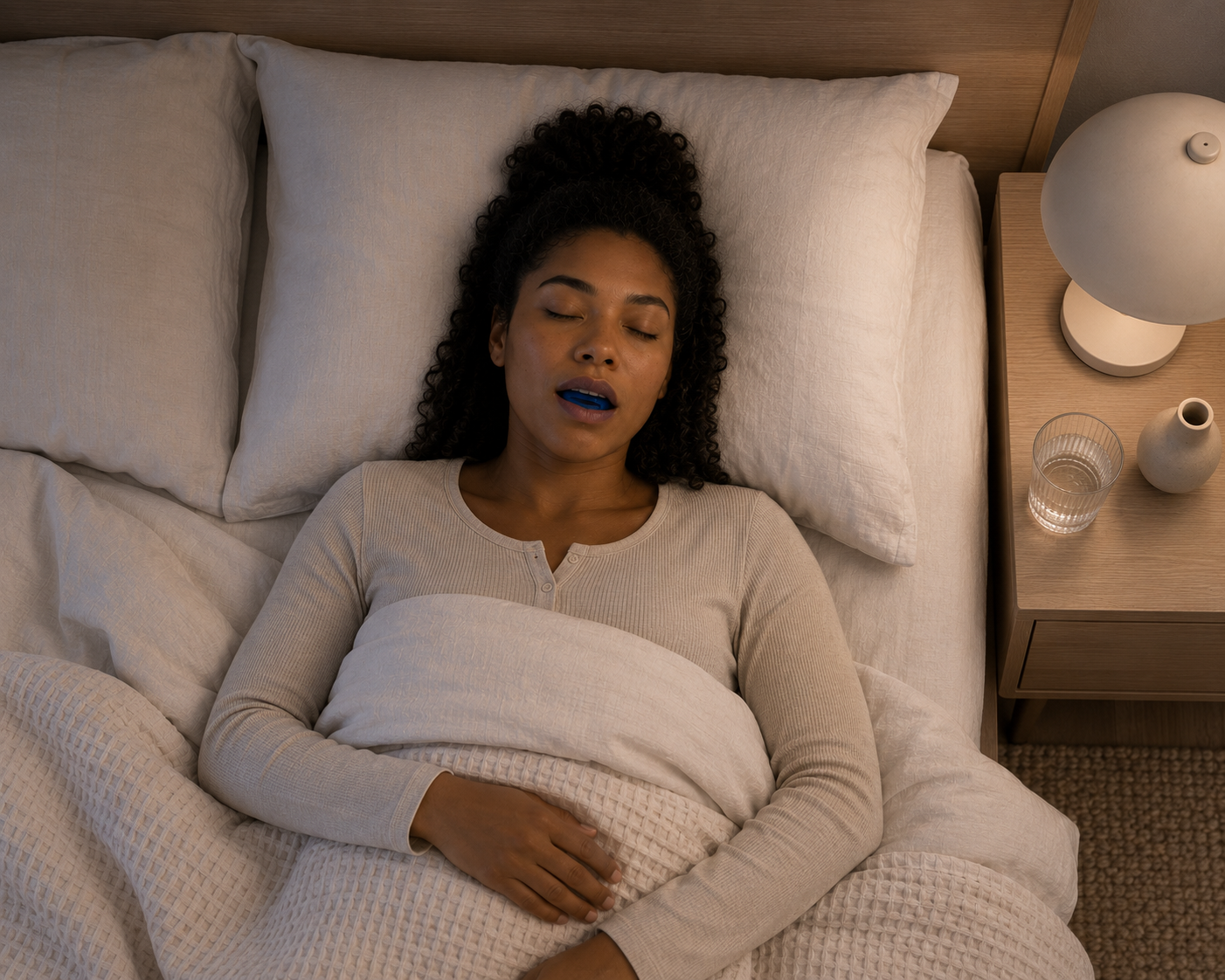
Grinding or clenching your teeth while you sleep is called sleep bruxism. It has many possible causes, including stress, caffeine, alcohol and some medications. But it also has a well-known link with sleep-disordered breathing. Mayo Clinic notes that "people who clench or grind their teeth during sleep are more likely to have other sleep disorders, such as snoring and pauses in breathing called sleep apnea." ( Mayo Clinic)
Dr. Goodman-Tabari explains what she sees chairside: "One of the most common signs of having a sleep disorder is grinding and clenching as well as snoring." When you lie back at night, the muscles and soft tissue in your throat can relax and narrow your airway. That narrowing causes the snoring sound, and your jaw may shift and clench as your body works to keep air moving.
Not everyone who grinds has a sleep problem. But because the two so often go together, she'd rather check. In her words, "All of my grinders, I recommend a sleep study, just to see what's going on at night. I'd rather know than not know."
Signs your grinding may be more than stress
- You snore, or a partner has heard you gasp or go quiet at night
- You wake up tired even after a full night in bed
- You get morning headaches or a sore jaw
- Your teeth show wear, chips or sensitivity near the gumline
- You wake up with a dry mouth
- Your night guard keeps wearing through
Sleep Education, the patient site of the American Academy of Sleep Medicine, lists tooth pain, jaw muscle pain, damaged or worn teeth and headaches among the symptoms of sleep bruxism, and notes that a sleep study can show whether another disorder, such as sleep apnea, is involved. ( Sleep Education)
A night guard isn't the whole answer
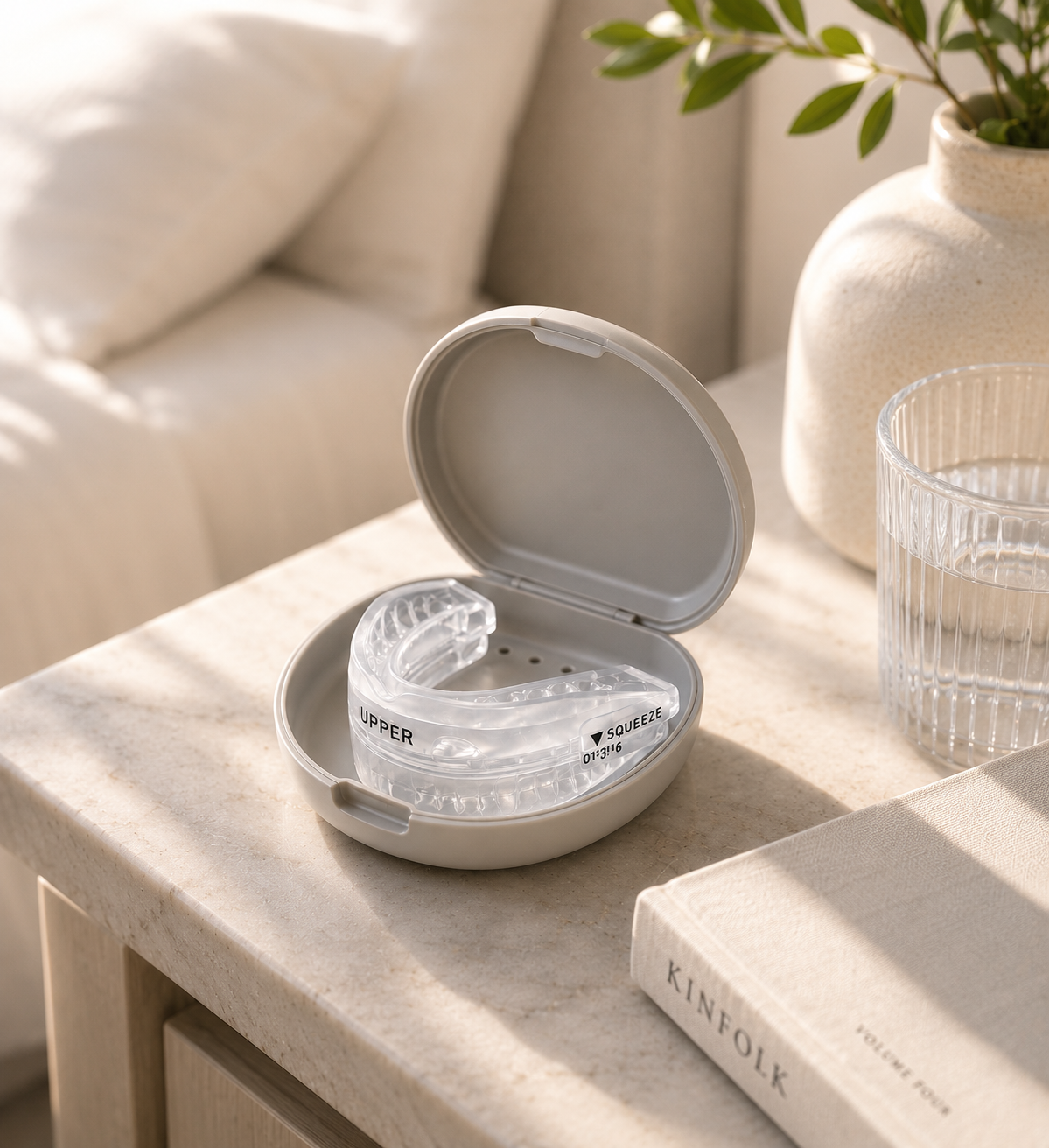
A night guard does an important job: it protects your teeth from wear. Keep wearing yours if you've been told to. What it doesn't do is open your airway or tell you whether your breathing is being interrupted. If the grinding is linked to a narrowed airway, protecting your teeth alone won't help you feel more rested.
That's the difference a sleep study makes. It shows what's happening while you sleep, so you're treating the cause and not only the wear and tear.
What happens if you grind and snore
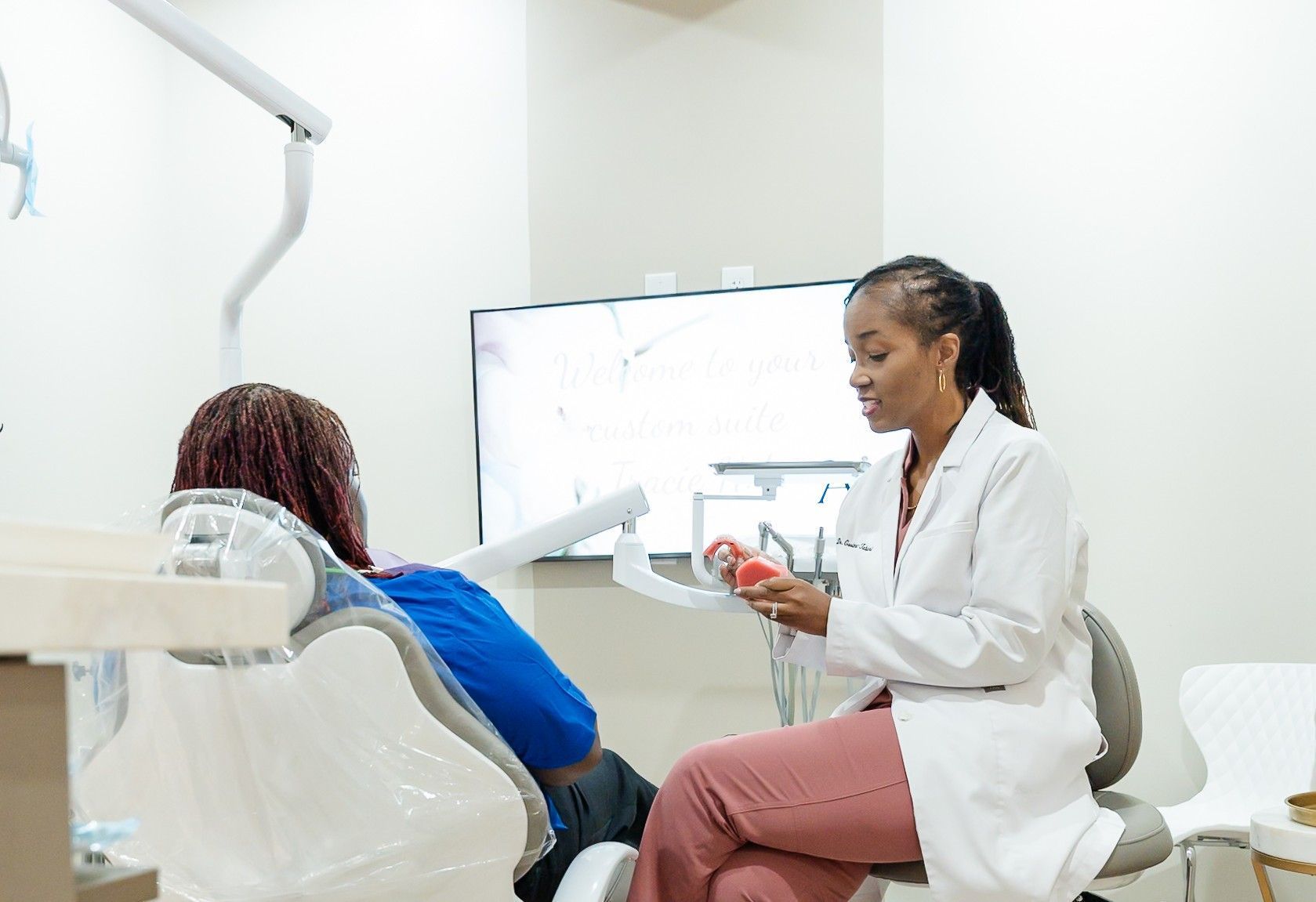
At your first visit in Glen Allen, our team takes a digital scan of your mouth and a 3D image of your airway, and Dr. Goodman-Tabari does a head and neck exam. She looks at wear on your teeth, your jaw, your tongue and your throat, and asks about your sleep and energy.
If a sleep study makes sense, you take a simple home sleep test in your own bed. A sleep physician we work with reads the results, meets with you by video and gives you your diagnosis.
If the study shows sleep apnea
Your options can include a CPAP, a custom oral appliance or, for some people, surgery. If an oral appliance is the right fit, Dr. Goodman-Tabari can choose a design that allows your jaw to move freely, which suits people who grind. See our guide to oral appliance designs and our oral appliance therapy page.
If the study shows snoring only, or nothing at all
That's good news, and it's still useful to know. You'll keep protecting your teeth, and you'll have a clear answer about your breathing instead of a question mark.
Common questions about grinding and sleep apnea
Is teeth grinding a sign of sleep apnea?
It can be. Grinding and clenching at night often go along with snoring and sleep apnea, though grinding has other causes too. If you grind and also snore or wake up tired, a sleep study is the clearest way to find out. Dr. Goodman-Tabari recommends one to her patients who grind in Glen Allen.
Will a night guard help sleep apnea?
No. A night guard protects your teeth from grinding, but it isn't designed to keep your airway open. A custom oral appliance for sleep apnea works differently: it holds your lower jaw forward while you sleep. It's prescribed after a sleep physician confirms your diagnosis.
Can treating sleep apnea stop grinding?
Some people find their grinding eases once their breathing at night is treated, but it doesn't happen for everyone, and grinding has other causes. We keep protecting your teeth while we treat your airway, and we check how you're doing at follow-up visits in Glen Allen.
Should I get a sleep study if I grind my teeth?
If you grind and also snore, wake up tired, get morning headaches or have been told you stop breathing, a sleep study is worth it. It's done at home in your own bed, and a sleep physician reads the results. Our Glen Allen team can tell you whether it makes sense for you.
Find out what's behind your grinding
Your teeth may be telling you something about your sleep. Call us at (804) 767-2507 or request a consultation at our Glen Allen office. Learn more about the signs of sleep apnea.