Sleep Apnea and High Blood Pressure: When Your Numbers Won't Budge

A-Z Sleep & Airway Center • October 5, 2026

Share this article

It's frustrating to take your medication, cut back on salt and still watch your blood pressure reading come back high. Sleep apnea is one of the overlooked reasons that can happen: when your breathing stops and starts all night, your body stays on alert, and that strain can show up in your numbers during the day. If you live in Glen Allen and your blood pressure has been hard to control, a simple home sleep test is a reasonable next question to ask.

Connecting your nights to your numbers

Every time your airway closes during sleep, your oxygen dips and your brain jolts you partway awake to start breathing again. You usually don't remember it, but your heart and blood vessels feel it, again and again through the night. The American Academy of Sleep Medicine lists chronic elevation in daytime blood pressure among the health consequences of obstructive sleep apnea.

Mayo Clinic notes that obstructive sleep apnea can raise the risk of high blood pressure and other heart conditions, and the National Heart, Lung, and Blood Institute reports that sleep apnea may raise the risk of high blood pressure, diabetes, heart disease and stroke.

Numbers that won't come down

Dr. Ashlee Goodman-Tabari pays close attention when a new patient mentions blood pressure that has been hard to control. When she hears that, she asks a simple question: "Has anyone ever tested you for sleep apnea?" Often the answer is no, not because anyone missed something, but because a sleep test isn't usually the first thing that comes up at a regular checkup.

That's why we see ourselves as a partner to your primary care doctor and cardiologist, not a replacement. If sleep apnea turns out to be part of the picture, treating it is one more piece your physicians can work with alongside everything else they're doing for your heart.

Signs that point to sleep apnea

Along with high blood pressure, watch for loud snoring, gasping or choking at night, a partner who says you stop breathing, morning headaches, waking up to use the bathroom often, and daytime tiredness that doesn't go away with more sleep. Mayo Clinic advises talking with a healthcare professional if you feel tired even after a full night's sleep, especially if you snore.

You don't need every symptom for testing to make sense. Our page on the signs and symptoms of sleep apnea covers the full list, and obstructive sleep apnea explains how it affects your health over time.

Setting honest expectations about treatment

Treating sleep apnea is about restoring healthy breathing and oxygen during sleep, and many people feel the difference in their energy and focus. We can't promise what it will do for your blood pressure specifically, and we'd never suggest stopping or changing a medication on your own. Those decisions stay with the physician who manages your blood pressure.

What we can do is make sure your treatment is working. For mild to moderate sleep apnea, a custom oral appliance holds your lower jaw slightly forward to keep your airway open, and we retest after fitting to confirm your breathing and oxygen have improved. For severe sleep apnea, CPAP is usually recommended, and we'll work with your sleep physician on the right plan.

Testing and care in Glen Allen

Testing starts at home. You wear a small device in your own bed, the results come back to us quickly, and a sleep physician reads them and makes the diagnosis. We coordinate that step and keep your primary care doctor in the loop. Sleep care is a medical service, so it's billed through your medical insurance, and our team explains how that works on our insurance and coverage page.

"I'm a one-stop shop," Dr. Goodman-Tabari says. Screening, testing and treatment happen under one roof at our office in the Shops at Cross Ridge, so you can get answers without bouncing between offices.

Common questions about sleep apnea and blood pressure in Glen Allen

Can sleep apnea cause high blood pressure?

Obstructive sleep apnea can raise the risk of high blood pressure. Repeated pauses in breathing drop your oxygen and keep your body on alert all night, which strains your heart and blood vessels. At A-Z Sleep & Airway Center in Glen Allen, we offer home sleep testing to find out whether sleep apnea is part of the picture.

Should I get a sleep test if my blood pressure is hard to control?

It's a reasonable question to ask, especially if you also snore, wake up tired or have been told you stop breathing at night. A home sleep test is simple and happens in your own bed. In Glen Allen, we coordinate testing with a sleep physician and keep your primary care doctor informed.

Will treating sleep apnea lower my blood pressure?

We can't promise a specific change in your blood pressure, and every person is different. Treatment restores healthier breathing and oxygen during sleep, and your physician decides how that fits with your blood pressure care. At our Glen Allen office, we retest after treatment to confirm your sleep apnea is actually under control.

Can I keep taking my blood pressure medication during treatment?

Yes. Sleep apnea treatment doesn't replace your blood pressure medication, and you should never stop or change a prescription without talking to the doctor who manages it. At A-Z Sleep & Airway Center in Glen Allen, we work alongside your primary care doctor and cardiologist so your care stays coordinated from start to finish.

Does insurance cover a sleep test for sleep apnea?

Sleep testing and sleep apnea treatment are medical services, so they run through your medical insurance, not dental. Coverage depends on your plan. Our team in Glen Allen verifies your benefits before treatment and walks you through what to expect, so there are no surprises about cost along the way.

Asking the question at your next visit

If your blood pressure has been stubborn and your sleep hasn't felt restful in a long time, it's worth finding out whether the two are connected. Call us at (804) 767-2507 or send us a message to schedule a consultation in Glen Allen. You can also start with a home sleep test.

Recent Posts

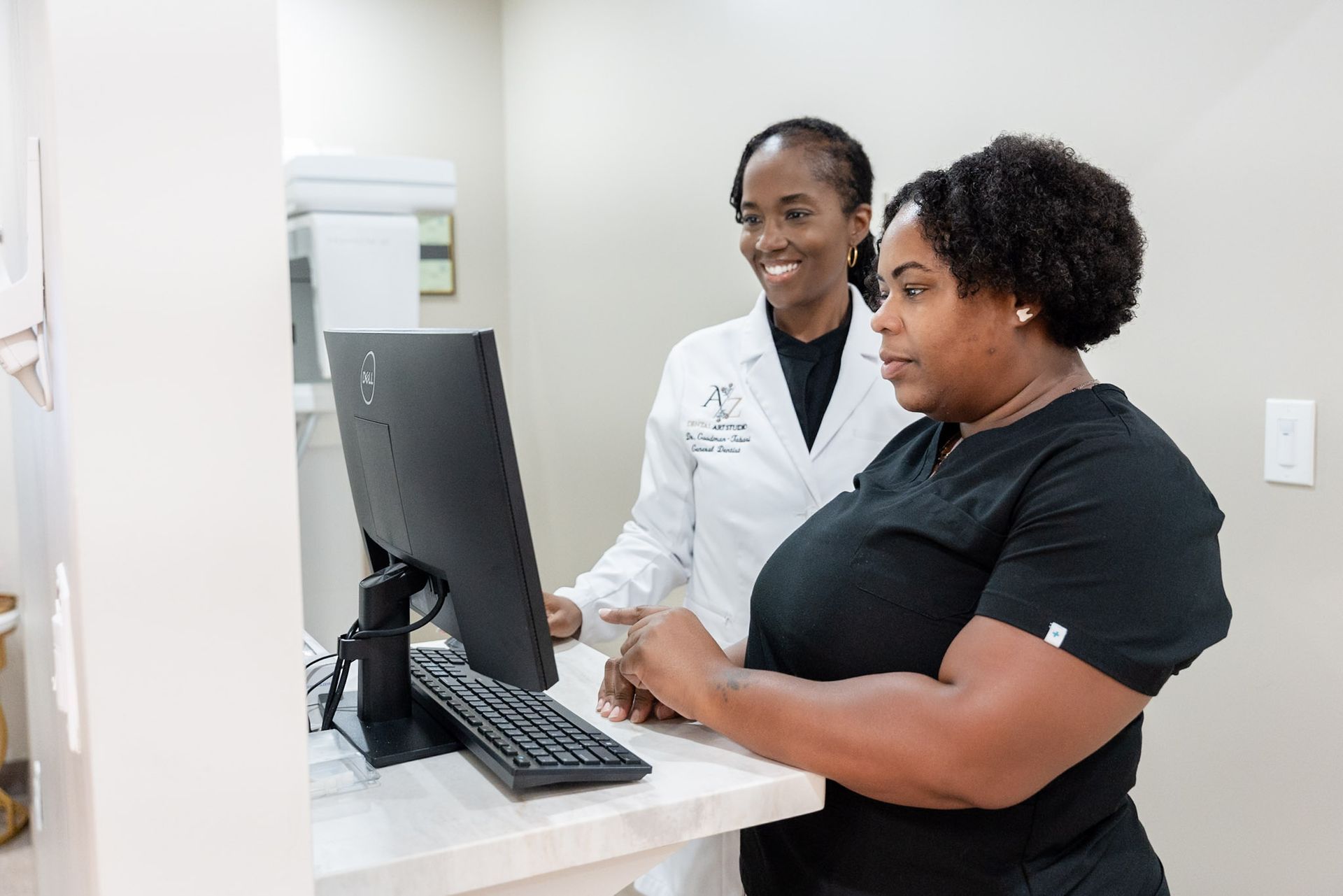
Dr. Goodman-Tabari and a team member reviewing a screen
By A-Z Sleep & Airway Center • November 1, 2026
A sleep physician makes the diagnosis. A trained dentist makes and fits your sleep appliance. How they work together in Glen Allen, VA. (804) 767-2507.

Dr. Ashlee Goodman-Tabari holding custom oral appliance models at A-Z Sleep & Airway Center
By A-Z Sleep & Airway Center • October 26, 2026
What to expect at your oral appliance consultation in Glen Allen, VA: a digital scan, an airway image, an exam and a home sleep test. Call (804) 767-2507
A relaxed patient reclines with headphones on at A-Z Sleep & Airway Center in Glen Allen, VA
By A-Z Sleep & Airway Center • October 15, 2026
Snoring is the sound of a body struggling for air. Learn when to get it checked and how we test and treat snoring in Glen Allen, VA. Call (804)-767-2507.
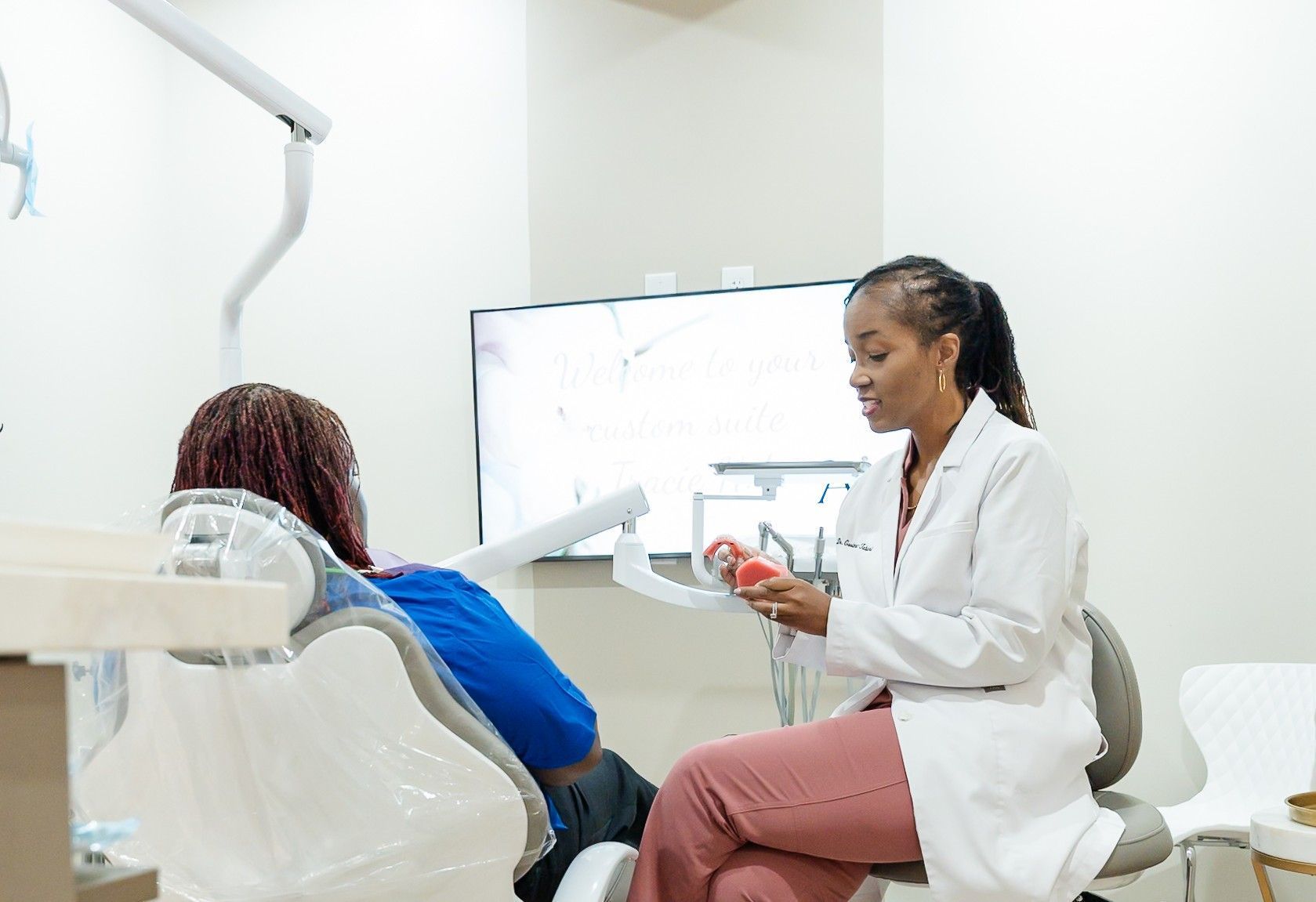
Oral appliance consultation at A-Z Sleep & Airway Center in Glen Allen, VA
By A-Z Sleep & Airway Center • October 8, 2026
Oral appliances for sleep apnea are billed to medical insurance, not dental. Learn what's covered and what you may pay for sleep care in Glen Allen, VA.

A man asleep on his back with his mouth open
By A-Z Sleep & Airway Center • October 6, 2026
Grinding and clenching at night often travel with snoring and sleep apnea. Why a night guard isn't the whole answer, from a Glen Allen sleep practice.
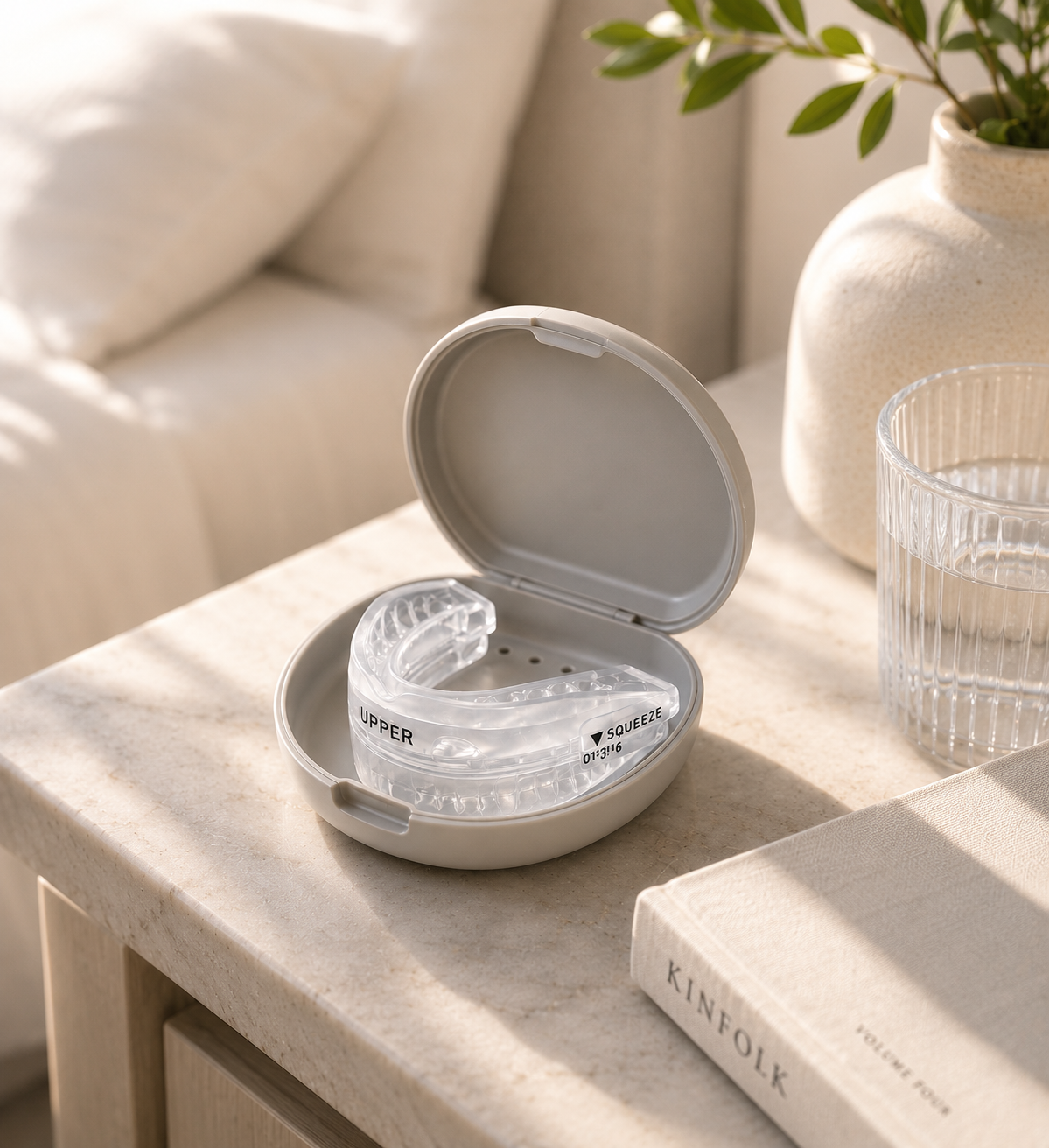
An oral sleep appliance in its open case on a bedside table
By A-Z Sleep & Airway Center • October 6, 2026
Sleep apnea and snoring appliances come in different designs for missing teeth, grinding and claustrophobia. How a Glen Allen sleep practice chooses yours.

A tired woman rests her head on her arm at the table, holding a coffee mug
By A-Z Sleep & Airway Center • October 6, 2026
Dr. Ashlee Goodman-Tabari has upper airway resistance syndrome. What UARS is, why a normal sleep test can miss it, and how it's treated in Glen Allen, VA.
A young girl asleep in bed, breathing through her mouth
By A-Z Sleep & Airway Center • October 6, 2026
Why some people breathe through their mouth at night, how it connects to snoring and sleep apnea, and what a Glen Allen sleep practice checks for.
A woman asleep in bed wearing an oral sleep appliance
By A-Z Sleep & Airway Center • October 5, 2026
What's normal in your first weeks with a sleep apnea oral appliance, what isn't, and why we retest, from A-Z Sleep & Airway Center in Glen Allen, VA.
A woman asleep wearing a ring-style home sleep test on her finger
By A-Z Sleep & Airway Center • October 5, 2026
What your AHI number, oxygen readings and severity rating mean after a sleep study, and what comes next, from a Glen Allen sleep and airway practice.
Show More