What is upper airway resistance syndrome?
Few things are as discouraging as finally doing a sleep study, hearing that your results look normal, and still dragging yourself through every afternoon. You know your exhaustion is real, and you want someone to keep looking. Upper airway resistance syndrome, or UARS, is one of the answers that often gets missed, and it's a condition Dr. Ashlee Goodman-Tabari knows firsthand. This post explains what UARS is, how it differs from sleep apnea, and how we look for it and treat it.
What is upper airway resistance syndrome?
Upper airway resistance syndrome is a sleep-disordered breathing problem where your airway narrows enough to make every breath harder work, without closing off completely the way it does in sleep apnea. Your body keeps straining for air through the night, your oxygen levels can dip, and your sleep gets broken up, so you wake up feeling like you never rested. Because your breathing never fully stops, UARS may not register as apnea on a basic reading.
How is UARS different from sleep apnea?
With obstructive sleep apnea, your airway collapses and you stop breathing, over and over, through the night. Mayo Clinic describes the classic signs as loud snoring, pauses in breathing that a partner often notices, and waking up gasping or choking. With UARS, your airway narrows and strains your breathing without fully stopping it. Both disrupt your sleep and drop your oxygen, and both can be treated.
- What your airway does: Obstructive sleep apnea: Collapses enough that breathing stops. Upper airway resistance syndrome: Narrows enough that breathing gets harder.
- How it shows up on a basic test: Obstructive sleep apnea: Pauses in breathing are counted. Upper airway resistance syndrome: Can be missed because breathing doesn't fully stop.
- How you feel: Obstructive sleep apnea: Tired, foggy, often snoring loudly. Upper airway resistance syndrome: Exhausted, foggy or anxious, often with a normal result.
- How we treat it: Obstructive sleep apnea: Oral appliance, CPAP or both, based on severity. Upper airway resistance syndrome: Custom oral appliance to hold the airway open.
What does UARS feel like day to day?
Many of the daytime signs of UARS overlap with the ones Mayo Clinic lists for sleep apnea, and they're easy to blame on a busy life:
- Waking up tired even after a full night in bed
- Brain fog and trouble focusing
- Morning headaches
- Feeling anxious or easily upset
A lot of people spend years putting these down to stress or age and never connect them to the way they breathe at night. When a sleep test comes back normal on top of that, it's easy to stop asking questions, and that's exactly when a closer look at your airway can help.
Why does Dr. Goodman-Tabari look so closely for UARS?
Dr. Goodman-Tabari has UARS herself and treats it with an oral appliance, so she knows how it feels to be told everything looks fine while you're running on empty. That experience shapes how carefully she looks for it in every patient she sees.
She also reads your mouth for clues. In her words, "a quick evaluation of the position of your jaw, the size of your tongue, or even the shape of your arch of your teeth can show us whether you suffer from sleep apnea, whether you stop breathing at night." Those same features help her spot the narrowing behind UARS. You can read more about her story on our Meet Dr. Goodman-Tabari page.
How is UARS diagnosed and treated?
Finding UARS takes a careful look at your airway and the right kind of testing. The process looks like this:
- Before your visit, we send you a short sleep questionnaire so we understand your concerns.
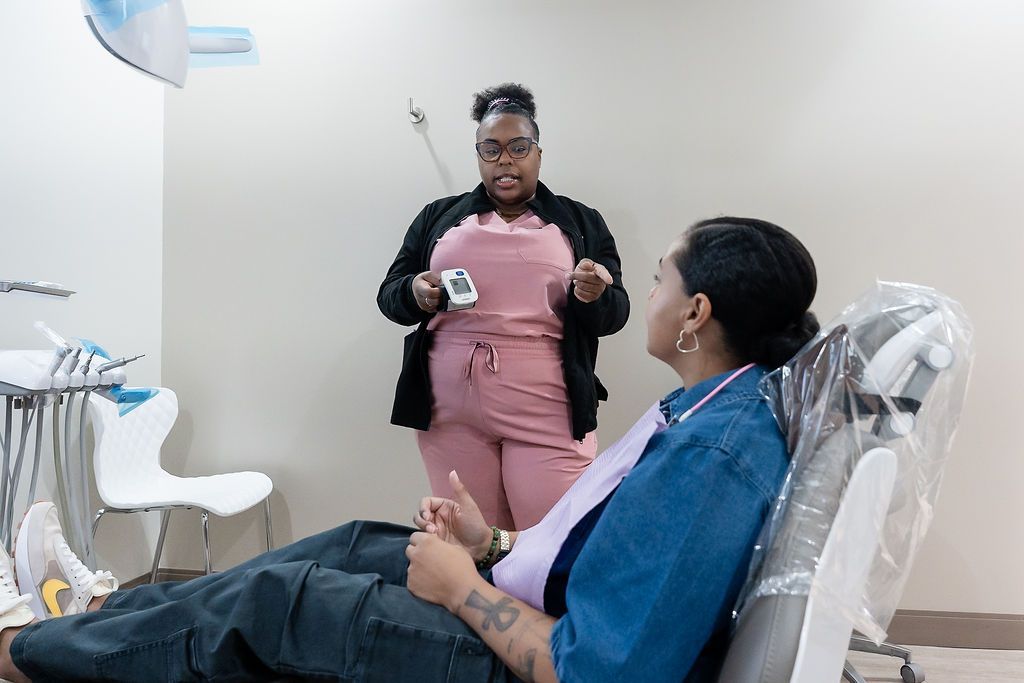
- At your consultation, we take a digital scan of your mouth and a 3D image to look closely at your bite and airway, and Dr. Goodman-Tabari does a head and neck exam.
- We arrange the right sleep testing for you, starting with a simple at-home study, and a physician reads the results.
- If we find UARS, a custom oral appliance gently holds your lower jaw forward so your airway stays open and your breathing isn't strained through the night.
- We fine-tune the appliance over follow-up visits and retest to confirm your oxygen is holding steady.
When it helps, we also bring in our partner myofunctional therapist, who works like a physical therapist for your mouth and airway. Mayo Clinic notes that a sleep specialist is the one who diagnoses a sleep breathing problem and gauges how severe it is, which is why a physician reads every study we send out.
When should you ask us about UARS?
If you're exhausted most days, your sleep test came back normal, and nothing you've tried has helped, it's worth a second look at your airway. Excessive daytime drowsiness is one of the signs Mayo Clinic says is worth raising with a health professional. You can learn more on our upper airway resistance syndrome page.
Frequently asked questions
My sleep test was normal but I'm always tired. Could it be UARS?
It could be. Upper airway resistance syndrome strains your breathing without fully stopping it, so it can be missed on a basic reading. A closer look at your airway and the right testing can find it, and it's treatable with a custom oral appliance. We'd be glad to take that closer look with you.
Is UARS the same as sleep apnea?
They're related, and they're different. With sleep apnea, you stop breathing over and over through the night. With UARS, your airway narrows and makes breathing harder without fully stopping. Both disrupt your sleep and drop your oxygen, and both can be treated once we know which one you're dealing with.
Can an oral appliance help with UARS?
Yes. A custom oral appliance gently holds your lower jaw forward so your airway stays open and your breathing isn't strained through the night. It's the same approach that treats mild to moderate sleep apnea, applied to the narrowing behind UARS, and we fine-tune it and retest until it's working for you.
How do I get started if I think I have UARS?
Call us at (804)-767-2507 or book online. Before your visit, we'll send a short sleep questionnaire. At your consultation, we'll scan your mouth, take a 3D image of your bite and airway, and talk through your symptoms. When you're ready, we'll arrange your at-home sleep test.
Book your visit in Glen Allen
You deserve to wake up feeling rested, and you deserve someone who keeps looking until you do. Schedule your consultation with Dr. Goodman-Tabari by calling A-Z Sleep & Airway Center at (804)-767-2507, or book online. We're at 10220 Staples Mill Rd, Glen Allen, VA 23060, between the eye doctor and the vet in the Shops at Cross Ridge.
Keep reading: home sleep testing, signs and symptoms of sleep apnea.
Published by A-Z Sleep & Airway Center.
Recent Posts