Is Sleep Apnea Genetic? What Glen Allen Families Should Know

A-Z Sleep & Airway Center • October 5, 2026

Share this article

If your father snored through the walls and your sister falls asleep the minute she sits down, it's fair to wonder whether the same thing is waiting for you. Sleep apnea does tend to run in families, and in Glen Allen we see why every week: the shape of your face, jaw and airway is something you inherit, and that shape has a lot to do with how well you breathe at night. A family history doesn't mean you have it, but it's a good reason to find out with a simple home sleep test.

Inheriting the shape of your airway

Most of us think of sleep apnea as something that happens to people who snore loudly or carry extra weight, so it can be surprising to learn that it often starts with anatomy you were born with. The National Heart, Lung, and Blood Institute puts it simply: your genes help determine the size and shape of your skull, face and upper airway. A smaller or set-back lower jaw, a large tongue, big tonsils or a narrow throat can all leave less room for air when the muscles relax during sleep.

Dr. Ashlee Goodman-Tabari explains it to patients the same way. "It's not necessarily a habit," she says. "It's like anatomy." That matters, because it takes the blame out of the conversation. If your airway is built on the narrow side, you didn't cause it, and willpower alone won't change how it behaves at 3 a.m.

Family history as an early clue

Researchers are still sorting out exactly which genes are involved, and there isn't one simple inheritance pattern. What the evidence does show is that the risk climbs when a close relative has it. MedlinePlus, from the National Library of Medicine, reports that the risk of developing obstructive sleep apnea is about 50 percent greater for first-degree relatives, such as siblings or children, than for the general public.

So if a parent or sibling uses a CPAP, wears an oral appliance, or has been told they stop breathing at night, treat that as useful information about you, not a verdict. Other things stack on top of family history, too: sleep apnea becomes more common with age and is more common in men, and extra weight around the neck can narrow the airway further. You can't change your family tree, but you can find out where you stand.

Recognizing it in yourself

Sleep apnea is sneaky because the loudest symptoms happen while you're asleep. Often it's a bed partner who notices first: heavy snoring, gasping, or a silence that lasts a little too long. During the day, it tends to show up as tiredness that sleep doesn't fix, morning headaches, trouble concentrating, or dozing off in the car or in front of the TV.

If those sound familiar and it also runs in your family, it's worth a closer look. Our page on the signs and symptoms of sleep apnea walks through what to watch for, and what causes snoring explains how the same narrowing can make you snore without stopping your breathing.

Watching for it in your children

Because airway shape runs in families, parents who have sleep apnea sometimes notice the early signs in their kids: snoring most nights, breathing through the mouth, restless sleep, or trouble focusing during the day. Children don't always look tired the way adults do, so it can come out as irritability or difficulty sitting still instead.

We see children as well as adults, and a child's airway is still growing, which is one more reason to ask early. You can read more about children's sleep and airway care and what an evaluation looks like for a young patient.

Getting answers in Glen Allen

A family history is a reason to test, not a diagnosis on its own. The first step with us is a conversation about your sleep, your symptoms and who else in the family has struggled, followed by a home sleep test you wear in your own bed. A sleep physician reads the results and makes the diagnosis, and we coordinate that for you so you aren't bouncing between offices. "I'm a one-stop shop," Dr. Goodman-Tabari says, and that's the point: screening, testing and treatment in one place.

If the test shows obstructive sleep apnea, we'll talk through what fits the severity and your life, from a custom oral appliance for mild to moderate cases to working alongside your physician when a CPAP is the better choice. Dr. Goodman-Tabari treats her own sleep-disordered breathing with an oral appliance, so she understands how much it means to finally wake up rested.

Common questions about sleep apnea and family history in Glen Allen

Is sleep apnea genetic?

Sleep apnea tends to run in families because the size and shape of your face, jaw and airway are partly inherited. There is no single sleep apnea gene, but having a close relative with it raises your risk. At A-Z Sleep & Airway Center in Glen Allen, we start with your family history and a home sleep test.

If my parent has sleep apnea, will I get it too?

Not necessarily, but your risk is higher. MedlinePlus reports that first-degree relatives have about a 50 percent greater risk than the general public. Age, weight and airway shape add to it. In Glen Allen, a simple home sleep test is the easiest way to find out whether it's affecting you.

Can a small or recessed jaw cause sleep apnea?

It can contribute. A smaller or set-back lower jaw leaves less room for the tongue and soft tissue, so the airway narrows more easily when you relax during sleep. Dr. Goodman-Tabari looks at your jaw and airway during your visit in Glen Allen and explains what she sees before recommending any testing or treatment.

Can children inherit sleep apnea?

Children can inherit the airway features that make sleep apnea more likely, such as large tonsils or a narrow jaw. Signs include nightly snoring, mouth breathing and restless sleep. We see children as well as adults in Glen Allen and coordinate with your child's physician when care calls for it, so the whole family is covered.

Should I get tested if sleep apnea runs in my family?

If you have a family history plus symptoms like snoring, gasping at night or daytime tiredness, testing is a good idea. At A-Z Sleep & Airway Center in Glen Allen, testing happens at home in your own bed, and a sleep physician reviews the results so you get a real diagnosis.

Finding out where you stand

If sleep apnea runs in your family and you've been wondering whether you're next, you don't have to keep guessing. Call us at (804) 767-2507 or send us a message, and our team will help you schedule a consultation at our Glen Allen office on Staples Mill Road. You can also see what to expect at your first visit.

Recent Posts

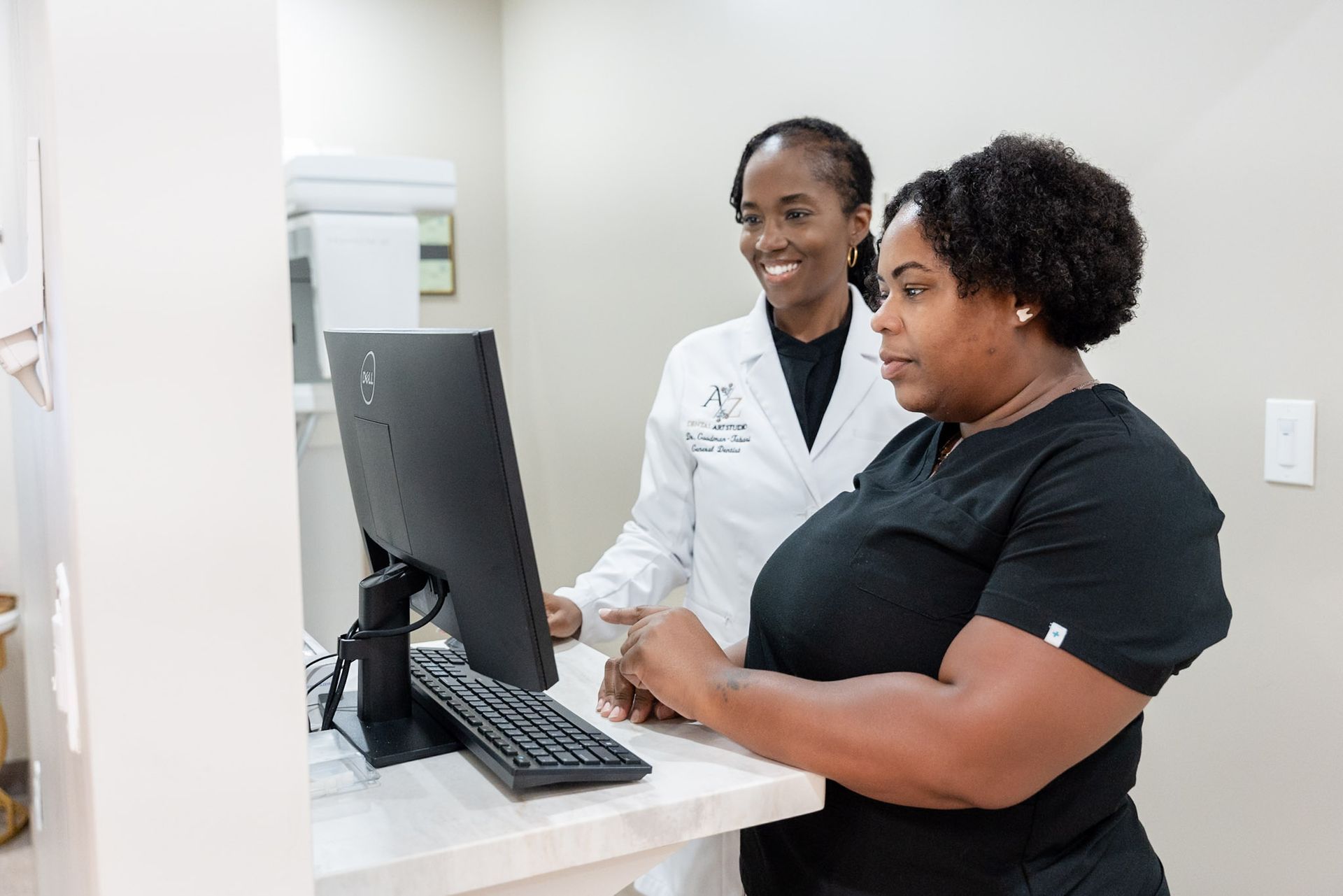
Dr. Goodman-Tabari and a team member reviewing a screen
By A-Z Sleep & Airway Center • November 1, 2026
A sleep physician makes the diagnosis. A trained dentist makes and fits your sleep appliance. How they work together in Glen Allen, VA. (804) 767-2507.

Dr. Ashlee Goodman-Tabari holding custom oral appliance models at A-Z Sleep & Airway Center
By A-Z Sleep & Airway Center • October 26, 2026
What to expect at your oral appliance consultation in Glen Allen, VA: a digital scan, an airway image, an exam and a home sleep test. Call (804) 767-2507
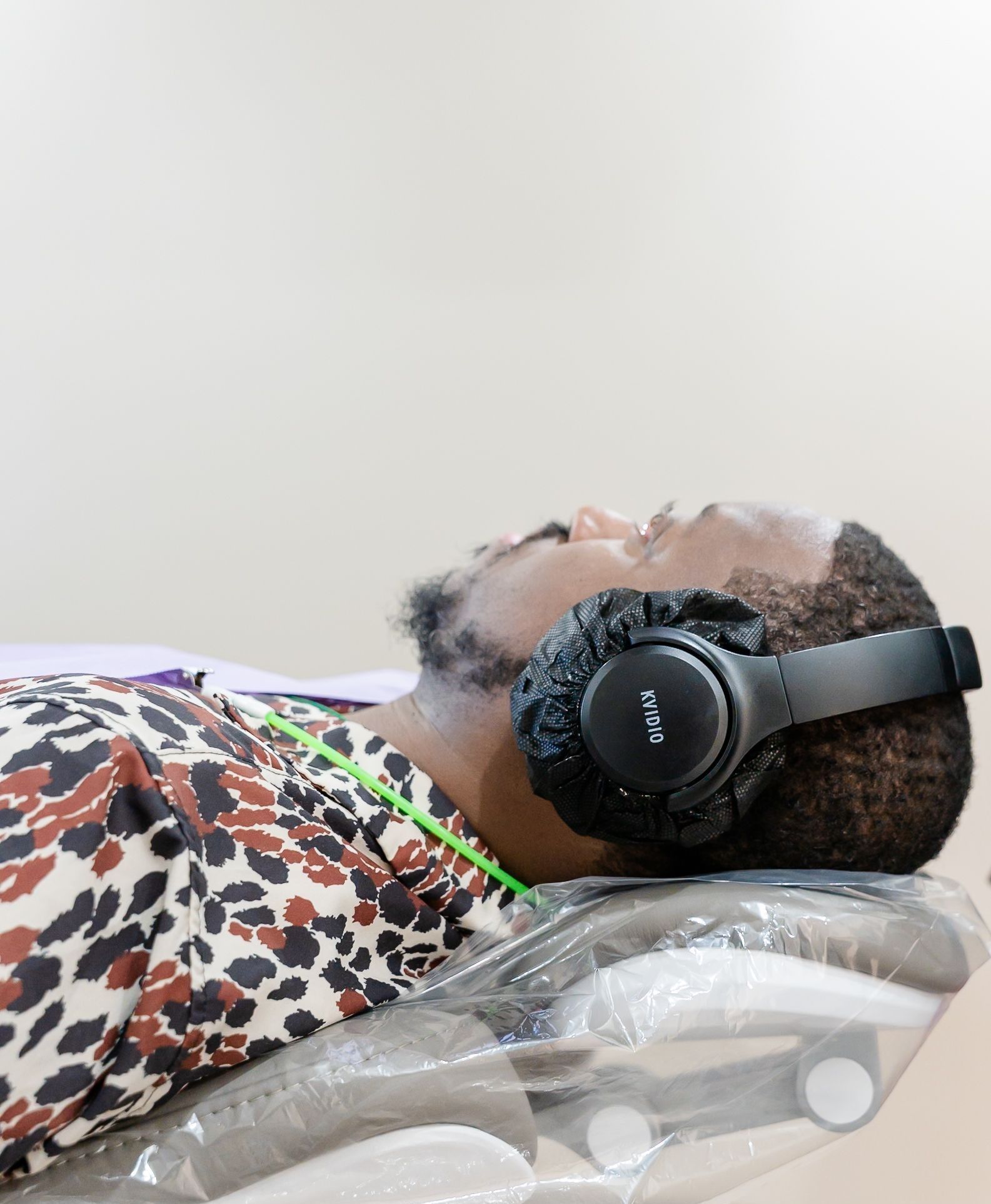
A relaxed patient reclines with headphones on at A-Z Sleep & Airway Center in Glen Allen, VA
By A-Z Sleep & Airway Center • October 15, 2026
Snoring is the sound of a body struggling for air. Learn when to get it checked and how we test and treat snoring in Glen Allen, VA. Call (804)-767-2507.
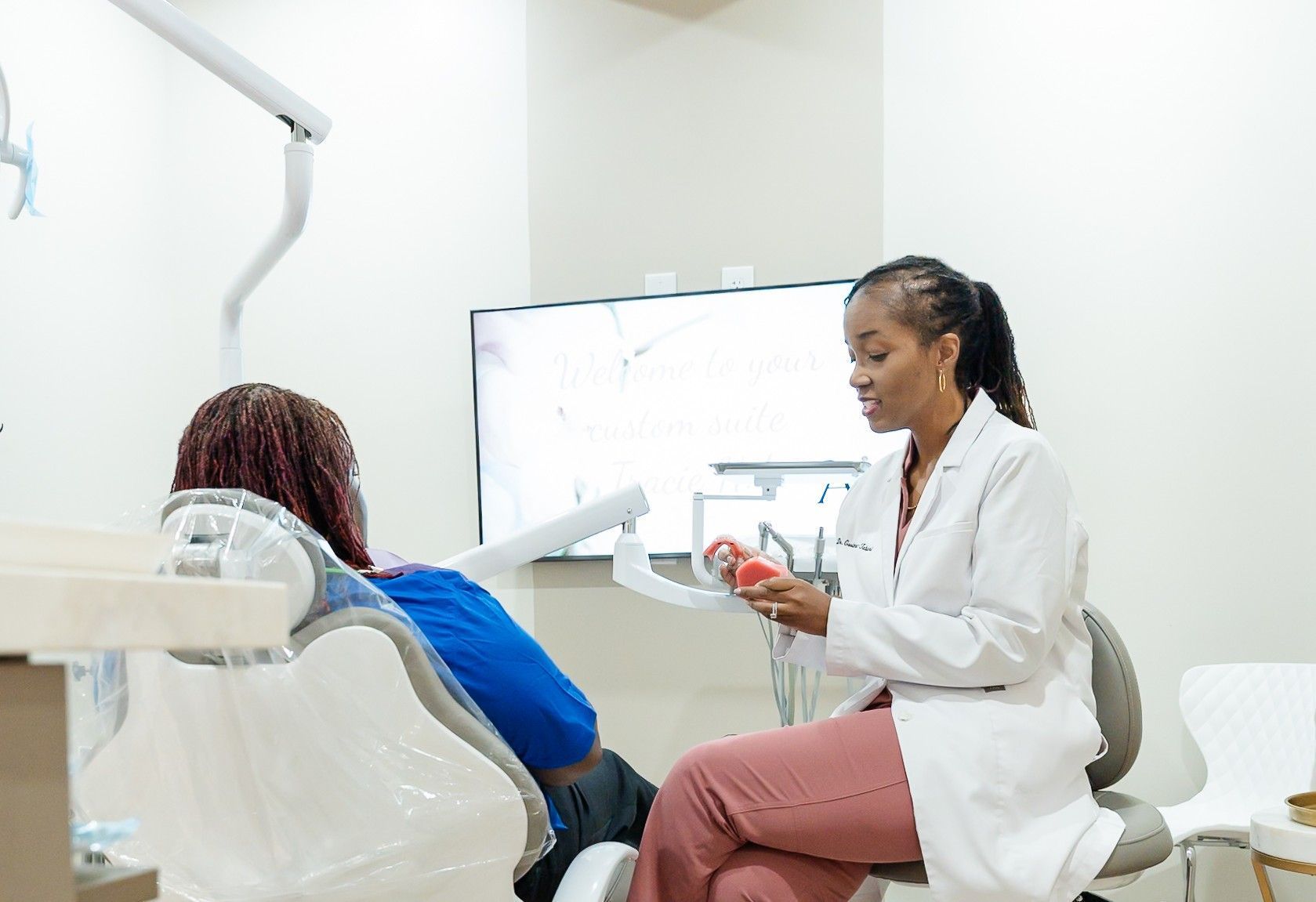
Oral appliance consultation at A-Z Sleep & Airway Center in Glen Allen, VA
By A-Z Sleep & Airway Center • October 8, 2026
Oral appliances for sleep apnea are billed to medical insurance, not dental. Learn what's covered and what you may pay for sleep care in Glen Allen, VA.
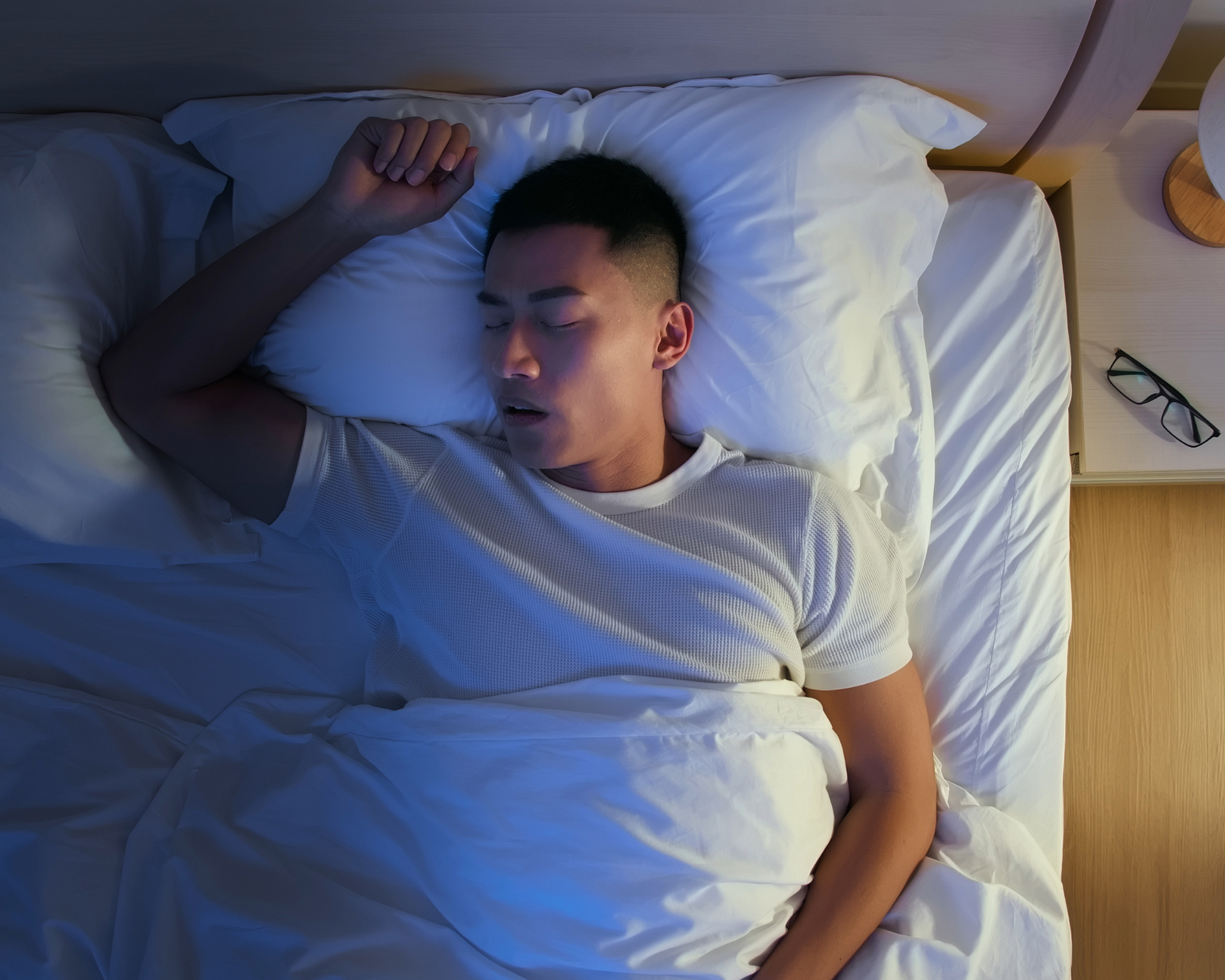
A man asleep on his back with his mouth open
By A-Z Sleep & Airway Center • October 6, 2026
Grinding and clenching at night often travel with snoring and sleep apnea. Why a night guard isn't the whole answer, from a Glen Allen sleep practice.
An oral sleep appliance in its open case on a bedside table
By A-Z Sleep & Airway Center • October 6, 2026
Sleep apnea and snoring appliances come in different designs for missing teeth, grinding and claustrophobia. How a Glen Allen sleep practice chooses yours.

A tired woman rests her head on her arm at the table, holding a coffee mug
By A-Z Sleep & Airway Center • October 6, 2026
Dr. Ashlee Goodman-Tabari has upper airway resistance syndrome. What UARS is, why a normal sleep test can miss it, and how it's treated in Glen Allen, VA.
A young girl asleep in bed, breathing through her mouth
By A-Z Sleep & Airway Center • October 6, 2026
Why some people breathe through their mouth at night, how it connects to snoring and sleep apnea, and what a Glen Allen sleep practice checks for.
A woman asleep in bed wearing an oral sleep appliance
By A-Z Sleep & Airway Center • October 5, 2026
What's normal in your first weeks with a sleep apnea oral appliance, what isn't, and why we retest, from A-Z Sleep & Airway Center in Glen Allen, VA.

A tired man yawns at his desk with his hand on his forehead
By A-Z Sleep & Airway Center • October 5, 2026
Blood pressure that stays high despite medication can be linked to sleep apnea. How the two connect, and how to get tested, from a Glen Allen sleep practice.
Show More